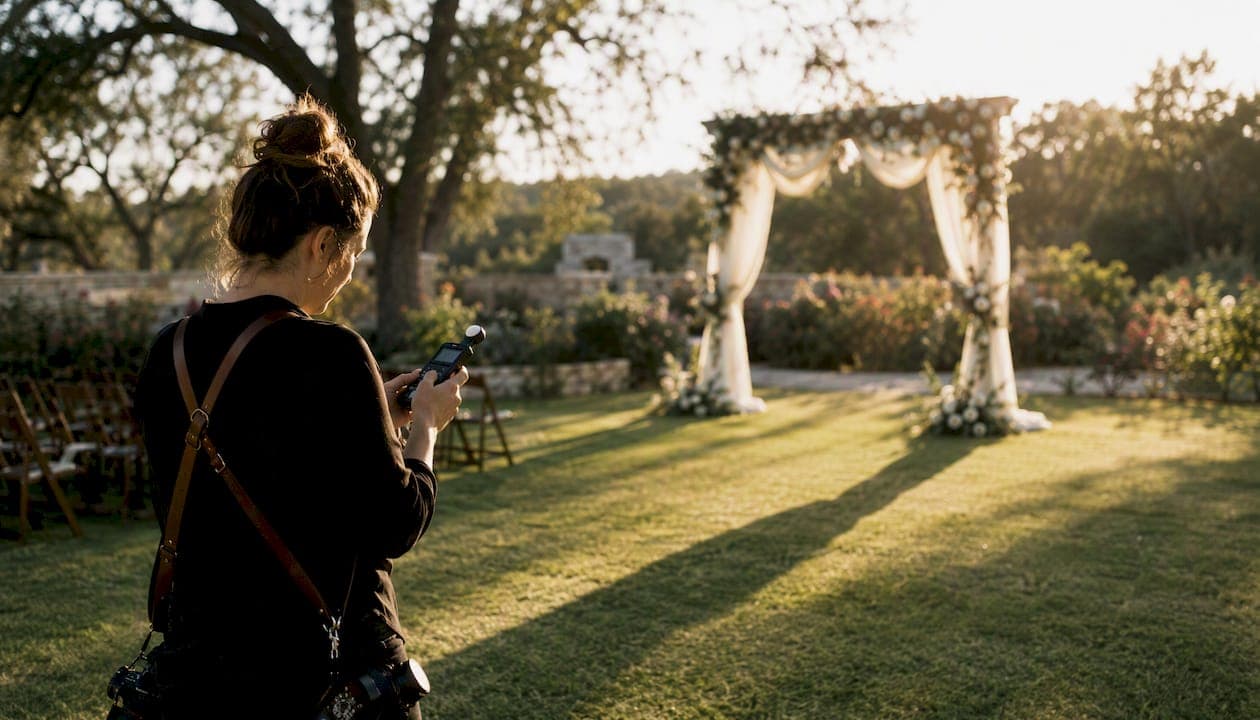
Yes, scouting a wedding venue in person is necessary, not optional. Photos and virtual tours hide the details that make or break your day: how light actually falls at 6 p.m., whether 150 guests will feel cramped in a "200 capacity" room, and what the venue's all-in cost really adds up to once service charges and fees hit the invoice.
Before you go further in your planning, do these three things:
- Request a fully itemized, all-in estimate for your expected guest count before you tour, not after you fall in love with the space.
- Schedule your visit at the same time of day and, if possible, the same season as your actual event.
- Bring your photographer or planner along for at least one visit, especially a technical walk-through closer to your date.
The rest of this guide walks through a complete site-visit checklist, the questions worth asking a venue manager, the red flags that should send you elsewhere, and a photographer's take on what scouting does for your final gallery.
Key Takeaways
Scouting a wedding venue in person protects your budget, your timeline, and your photos in ways no gallery or floor plan can replicate on its own.
| Point | Details |
|---|---|
| Get pricing in writing first | Request a fully itemized, all-in estimate for your guest count before touring, including the typical 18% to 25% service charge range. |
| Tour at your actual event time | Visit at the same time of day and season as your wedding to judge real lighting, temperature, and noise. |
| Check logistics, not just looks | Inspect vendor access, comfortable capacity, accessibility, power, and acoustics on every visit. |
| Walk away from evasive answers | Treat vague pricing, poor vendor access, or an unusable rain plan as reasons to cross a venue off your list. |
| Bring a photographer along | Larson Pro Photography joins technical visits to check lighting and plan a realistic wedding-day shot list. |
Table of Contents
- Why the Importance of Scouting Wedding Venues Goes Beyond Aesthetics
- When Should You Schedule Wedding Venue Site Visits?
- What to Inspect During a Site Visit
- What Does a Photographer Look for When Scouting a Venue?
- Budget and Contract Details to Confirm Before You Sign
- Questions to Ask the Venue Manager on Your Tour
- Red Flags That Should Send You to the Next Venue
- How to Prepare for a Productive Site Visit
- Vetting a Venue Remotely When You Can't Visit in Person
- Booking Timeline: What Happens After a Successful Scout
- What a Scouting Trip Taught Me About Timeline Planning
- How Larson Pro Photography Supports Your Venue Scouting
- Sources
Why the Importance of Scouting Wedding Venues Goes Beyond Aesthetics
A venue tour isn't about confirming the space looks as good in person as it did online. It's a logistics audit. Guest flow, accessibility, vendor access, parking, acoustics, and backup plans for bad weather rarely show up in a photo gallery, and each one can quietly wreck a wedding day if it's discovered too late.
A site visit surfaces details that photos and virtual tours simply can't, including how guests will actually move from ceremony to cocktail hour, where vendors will load in equipment, and how far the restrooms are from the reception space, according to Vogue's guide to choosing a wedding venue. Choosing a venue from photos alone is one of the most common mistakes couples make, because logistics matter more than how a room photographs on Instagram.
The financial stakes are just as real. Service charges, catering minimums, and mandatory vendor fees rarely appear on a venue's public pricing page, and they can shift your total cost by thousands of dollars. Ask for an all-in, itemized estimate before you tour, not after a coordinator has walked you through a candlelit reception hall and you're already picturing your first dance there.
Pro Tip: Write down your top five non-negotiables (capacity, accessibility, parking, indoor backup, budget ceiling) before you visit any venue. Review that list after the tour, before you let the aesthetics sway your gut reaction.
When Should You Schedule Wedding Venue Site Visits?
Timing shapes what a scout can actually tell you. A ballroom that looks stunning at 2 p.m. can turn harsh and shadowy by golden hour, and a garden venue that feels breezy in October might be unbearable in July.
- Right after you get engaged, before booking vendor-dependent services. Venue choice sets your date and shapes availability for photographers, caterers, and florists, and A Practical Wedding recommends treating the venue as the first booking decision, not one that happens alongside everything else.
- At the same time of day and season as your actual event. Touring a venue at the hour your ceremony will happen lets you evaluate real lighting, temperature, and even how loud nearby traffic gets, according to guidance from ArteVisualMF's venue scouting guide. A visit six months out at noon tells you almost nothing about your 5 p.m. reception in October.
- A minimum of two visits, sometimes three. The first tour is emotional orientation. The second is a technical audit, ideally with your planner or photographer present to confirm power access, load-in routes, and realistic setup timing. A final walk-through in the weeks before the wedding catches anything that changed since booking.
What to Inspect During a Site Visit
Bring a checklist. Without one, it's easy to get swept up in decor details and forget to check whether the loading dock can fit a catering truck.
- Layout and flow: Trace the path from arrival to ceremony to cocktail hour to reception. Note where restrooms, vendor staging, and backup indoor space sit relative to the main event areas.
- Capacity versus comfort: A venue's stated maximum capacity is rarely its comfortable capacity, and confirming the difference for your actual guest count matters more than the number on the website, per guidance from Celebration Muse's venue guide.
- Vendor access: Check loading zones, elevator size, kitchen location, and how far caterers and florists have to carry equipment.
- Accessibility: Confirm ADA-compliant paths, restroom proximity, and seating options for older guests or anyone with mobility needs.
- Power and connectivity: Locate outlets and amperage for DJs and photographers, check Wi-Fi reliability, and test cell coverage in low spots.
- Acoustics and noise: Stand in the ceremony spot and talk at a normal volume. If you can't hear yourself clearly, your guests won't hear the officiant either.
- Documentation: Measure doorway widths for vendor equipment, photograph the routes your vendors will use, and sketch a rough labeled map while it's fresh in your mind.
Treat the visit like a technical audit rather than a showroom tour: check setup windows, potential overtime costs, and whether the rain plan is genuinely usable, not just a hallway with folding chairs stacked against the wall.
Pro Tip: Ask for a sample itemized, all-in estimate for your exact guest count before you leave the property. A verbal "it's usually around..." answer isn't good enough to build a real budget on.
What Does a Photographer Look for When Scouting a Venue?
Photographers scout differently than couples do, and that difference shows up in your final gallery. When Todd walks a venue, he's tracking the direction of light at your actual ceremony time, scouting shaded backup spots for portraits, and flagging reflective surfaces or cluttered backdrops that could ruin an otherwise perfect shot.
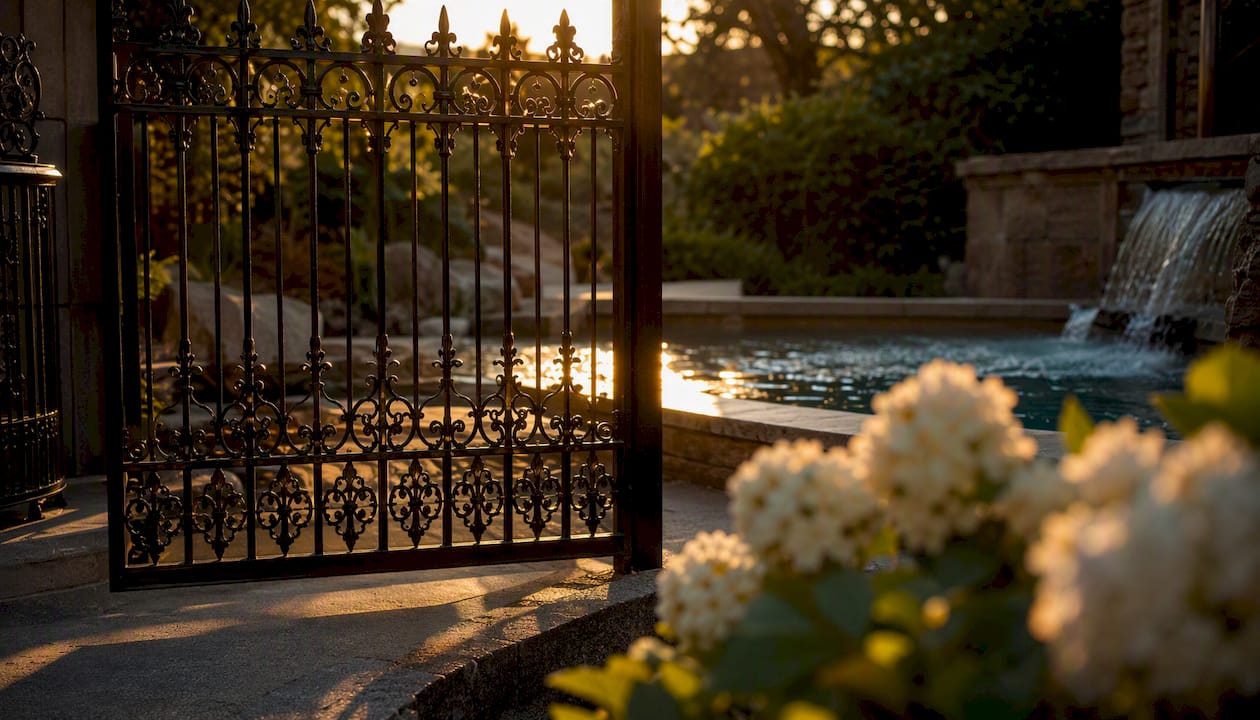
Photographers and videographers use scouting visits to plan shot lists, identify golden-hour portrait locations, and catch lighting or weather problems before they become a surprise on the wedding day. That advance work directly shapes your timeline: when the first look happens, how much time gets built in for portraits before the light fades, and how much walking time is realistic between locations.
A few specifics worth confirming on a technical visit:
- Direction and quality of natural light at the ceremony altar during your actual ceremony hour.
- At least one shaded or covered portrait spot as a backup for harsh midday sun or rain.
- Sightlines from the reception tables to the first dance and cake-cutting areas.
- A confirmed sunset-facing spot if golden-hour portraits are a priority.
- Power access and outlet locations for photography and videography lighting gear.
Getting the direction of light right at your ceremony time can be the difference between a portrait that glows and one that squints, and Larson Pro Photography's guide to lighting techniques for outdoor weddings walks through how that plays out across different venue types.
Pro Tip: Bring your photographer, or at minimum a photographer's checklist, on one of your technical visits. A trained eye will catch lighting and staging issues that don't occur to most couples until the wedding day is already underway.
Budget and Contract Details to Confirm Before You Sign
The rental fee on a venue's website is almost never the total cost. Service charges, taxes, gratuity, and mandatory add-ons routinely push the real number well past the headline figure.
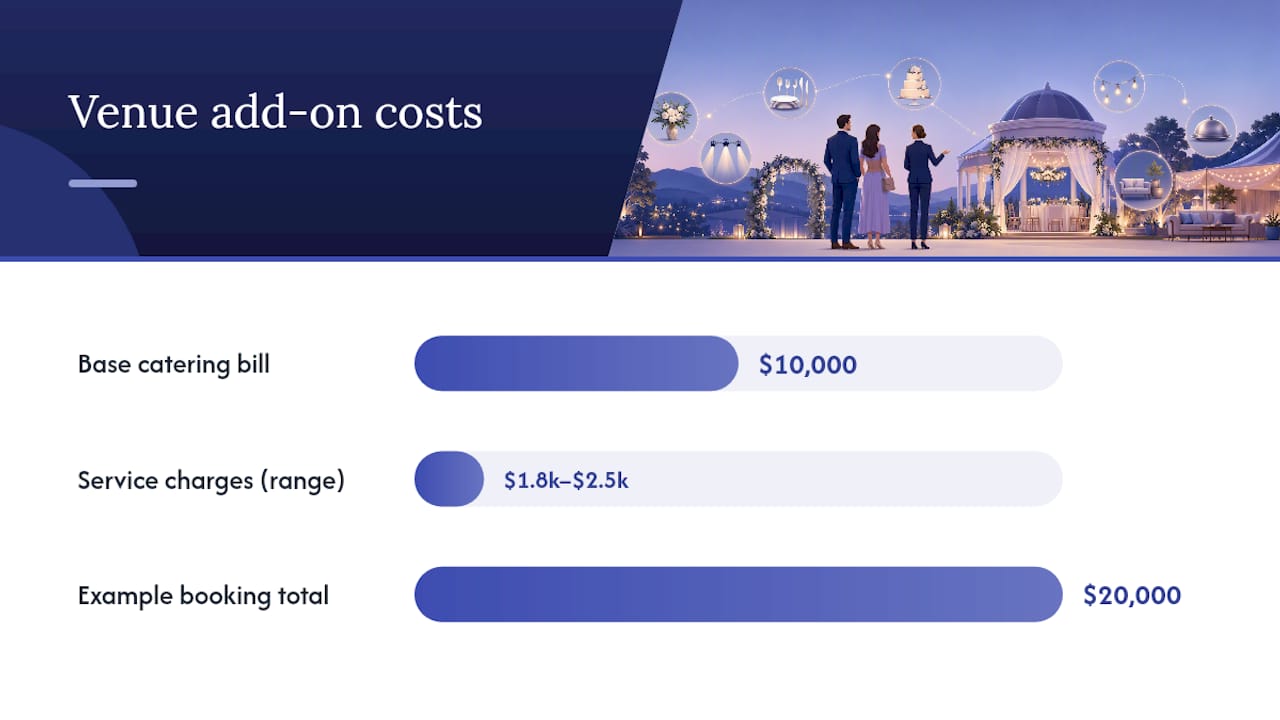
Service charges typically run on top of food, beverage, and sometimes the rental fee itself, usually adding a significant percentage, according to The Knot's wedding budget breakdown. That range alone can shift a $10,000 catering bill by $1,800 to $2,500, so get it in writing before you sign anything.
Before committing, confirm:
- A written, itemized estimate for your exact guest count, including taxes, service charges, gratuity, and any mandatory minimums.
- Whether catering must come from an in-house or exclusive vendor list, and if so, get pricing and menus from those vendors directly since their cost becomes part of the venue decision, per Celebration Muse.
- Alcohol policies, tasting availability, and food and beverage minimums.
- Cancellation terms, force majeure language, and the process for changing your date.
- Curfew and noise restrictions, insurance requirements, and who's responsible for setup and breakdown staffing.
Payment processing fees on large venue deposits are another line item couples often overlook entirely, and they can add real cost to a $20,000 booking, according to PaySec's breakdown of wedding venue processing fees. Ask how deposits are processed and whether that fee gets passed on to you.
Ask specifically whether service charges are taxed differently than the base rental in the venue's jurisdiction, since that distinction can change your final total more than people expect.
Questions to Ask the Venue Manager on Your Tour
Bring a written list. Comparing venues fairly only works if you ask each one the same questions and get answers in writing, not just a verbal impression.
- What's included in the base rental, and what counts as an add-on?
- What's the difference between the service charge, gratuity, and tax on my invoice?
- When is my final guest count due, and how does that affect my final bill?
- Do you have a preferred vendor list, or can I bring outside caterers, florists, and rental companies?
- What are the setup and breakdown windows, and is there an overtime fee if we run late?
- Is there a noise curfew, and are open flames like candles allowed?
- What's the parking situation for guests, and is there a shuttle or valet option?
- Can decor be attached to walls, ceilings, or existing fixtures?
- Are pets allowed for the ceremony?
- Do you have accommodation partnerships nearby for out-of-town guests?
Red Flags That Should Send You to the Next Venue
Some warning signs show up before you even schedule a tour. Others only surface once you're standing in the space asking direct questions.
- Evasive pricing answers. If a coordinator won't give you a straight number or keeps deflecting to "it depends," that vagueness usually continues after you've signed a contract.
- No itemized estimate available. A venue that can't produce a written, all-in estimate for your guest count on request isn't ready to be trusted with your deposit.
- Poor vendor access. No dedicated loading zone, a tiny service elevator, or a kitchen located far from the reception space all translate to setup delays and stressed vendors on the day.
- A rain plan that doesn't actually work. If the "indoor backup" is a hallway or a room a third the size of your guest list, it's not a real Plan B.
- A noise curfew that conflicts with your reception timeline. Find this out before you book a band, not after.
- Little to no wedding experience. A venue that mainly hosts corporate events may not have staff who understand wedding-day timing pressure.
How to Prepare for a Productive Site Visit
Walking in unprepared wastes the one chance you have to compare venues on equal footing. Bring the right materials and the right people, and you'll leave with something more useful than a good feeling.
What to bring:
- Your estimated guest count and a draft budget range.
- A written list of your non-negotiables.
- A tape measure for doorways, aisles, and dance floor space.
- Your phone, fully charged, for photos and video.
- A printed copy of your question checklist.
Who to bring: a planner if you have one, your photographer for at least one technical visit, and a trusted family member or friend who can offer a second opinion once the initial excitement wears off.
Record everything the same way for every venue. A shared spreadsheet or planning doc with standardized fields, timestamped photos, and a quick pros/cons list written immediately after the tour beats trying to remember details three venues later.
Pro Tip: Assign one person on the tour to track timeline notes specifically: arrival, ceremony, cocktail hour, dinner, and send-off. Setup timing constraints are easy to miss when everyone's focused on how the room looks.
Vetting a Venue Remotely When You Can't Visit in Person
Destination weddings and tight travel budgets sometimes make an in-person scout impossible. That doesn't mean you skip the process. It means you rebuild it remotely.
- Request a live video walkthrough scheduled at the actual time of day your event would occur, so you can judge real lighting and noise conditions.
- Ask for a timed walkthrough of the vendor access route, from loading zone to kitchen to reception space.
- Get floor plans with accurate measurements and an itemized estimate for your exact guest count in writing.
- Request references from recent couples or vendors who've worked events there.
- If possible, hire a local planner or trusted vendor to do an in-person technical audit on your behalf.
Pro Tip: Ask the venue manager to show you both the best-case and worst-case version of the indoor backup space on video. A venue confident in its rain plan won't hesitate to show you the unglamorous version.
Booking Timeline: What Happens After a Successful Scout
Once you've toured your shortlist, the comparison gets easier if you're using the same framework for every venue.
Build a venue-specific budget comparison showing the fully loaded cost for your exact guest count at each site, since a headline rental fee is rarely the real total once fees and minimums are factored in, according to WeddingTipsForBrides' venue decision guide. Venue costs commonly represent a significant share of total wedding spend, so getting this comparison right early protects the rest of your budget.
Before you sign:
- Request a written cost breakdown, not just a verbal quote, for every venue on your shortlist.
- If flexibility on vendors matters to you, ask whether the preferred vendor list has any exceptions written into the contract.
- Confirm overtime rates in writing so a late reception doesn't turn into a surprise bill.
Once you've picked a venue, the booking sequence typically runs:
- Sign the contract and pay the initial deposit to hold your date.
- Submit your final guest count by the deadline specified in your contract, usually two to four weeks before the event.
- Schedule a final walk-through with your vendors roughly one to two weeks out to confirm setup timing, access routes, and any last-minute changes.
What a Scouting Trip Taught Me About Timeline Planning
A few years into shooting weddings, Todd walked a venue that looked perfect in every listing photo: string lights, a rustic barn, a wide-open field for portraits. On the scout, standing in that field at the couple's actual ceremony time, the sun was sitting directly behind where the officiant would stand. Every test shot came back as silhouettes and lens flare.
That one visit changed the entire ceremony layout. Moving the arch 40 feet and rotating it 90 degrees solved the lighting problem completely, but nobody would have caught it from a listing photo taken at a different hour. The fix took five minutes on-site. Catching it after the ceremony started would have taken it out of every photo permanently.
The lesson: always check the light at your exact ceremony time, not whenever the venue happens to be free for a tour. A venue that looks flawless at 11 a.m. can be unusable at 5 p.m., and the only way to know is to stand in the actual spot at the actual hour and watch what the sun does.
How Larson Pro Photography Supports Your Venue Scouting
Scouting a venue alone means guessing at lighting angles and hoping the portrait spot you liked in photos actually works at 6 p.m. in October. Larson Pro Photography removes that guesswork by joining technical visits directly, checking light direction at your ceremony time, confirming portrait locations, and mapping out a realistic shot list before your wedding day arrives.
That kind of technical scouting catches problems a couple touring alone would likely miss, from harsh backlighting at the altar to a "golden hour" spot that's actually blocked by a building at that hour. It also means your timeline gets built around real lighting conditions instead of guesswork, so portraits, first look, and reception transitions all land when the light actually works in your favor.
If you're planning a wedding or engagement session in the San Antonio area, visit the Larson Pro Photography clients page to see recent work and request a consultation, or check out the engagement session details to book a session that doubles as a practical test run for your wedding-day timeline.
Sources
A handful of guides shaped the budget figures and checklist items covered here, and each is worth a closer read for specific planning stages.
- Wedding budget breakdown | The Knot
- Everything to Know About Choosing a Wedding Venue | Vogue
- How to choose a wedding venue | A Practical Wedding
- Wedding venue decision guide | WeddingTipsForBrides