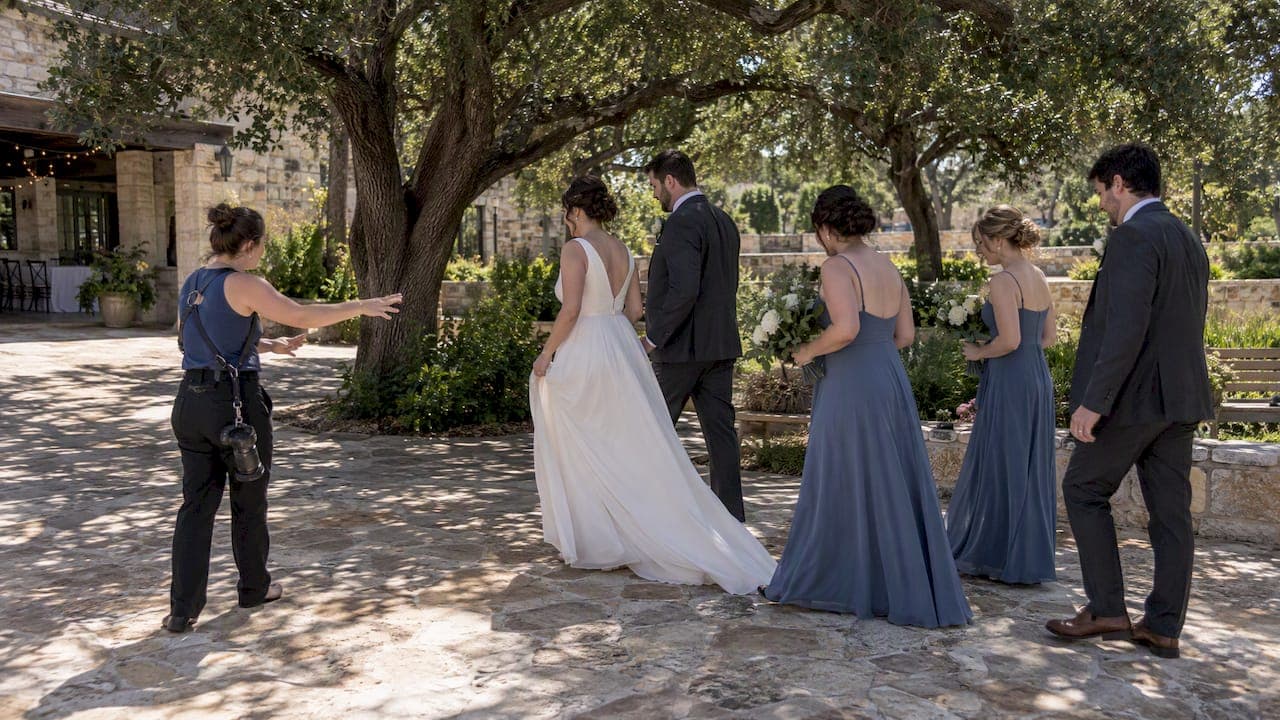
The priorities on a hot wedding day are simple: shift the hardest portraits to cooler light, shoot in shade or backlight, keep everyone hydrated, and adjust your exposure and white balance for harsh sun. None of this sacrifices beauty. It means protecting people from heat stress while still walking away with a gallery that looks effortless.
TL;DR:
- Schedule formal portraits and wedding party groups for early morning or golden hour, reserving the couple’s 10 to 20 minute session for late light.
- During active outdoor portions, offer about 8 ounces of water every 15 to 20 minutes, while keeping total intake below roughly 6 cups hourly.
- Scout open shade near pale walls or pavement, use backlight, and add restrained fill flash to soften facial shadows without competing with the sun.
- Direct sun can add up to 15°F to shaded Heat Index readings, so keep portraits in shade and take breaks every 20 to 30 minutes.
Table of Contents
- Quick action checklist for the photographer and planner
- Timeline and scheduling: when to photograph which shots in hot weather
- Camera, lens and exposure settings for bright sun and heat
- Shade, diffusion, and controlling harsh sunlight for flattering portraits
- Keeping people safe and comfortable
- On-site tactics and props that make photos easier on hot days
- Photographer-first tips from Todd and Larson Pro Photography
- A photographer's perspective on balancing beauty and safety
- How we help you plan around the heat
- FAQ
- Sources
Quick action checklist for the photographer and planner
A hot wedding day runs smoother when everyone knows their job before the heat sets in. The photographer, planner, and a designated family member each carry a piece of the plan.
- Photographer: Build the formal portraits and wedding party shots into the golden hour or late afternoon window.
- Photographer: Scout two or three shaded or backlit spots near the ceremony and reception before guests arrive.
- Planner: Station chilled water and electrolyte packets somewhere guests pass naturally, not tucked in a back room.
- Planner: Hand out handheld fans or a few battery misters to the wedding party during standing portraits.
- Family member: Keep spare umbrellas and a sunscreen station near the gathering area for guests between shots.
Two camera-side swaps matter most once you're actually shooting. First, move subjects into shade or position them with the sun behind them rather than fighting it head on. Second, use a reflector or a touch of fill flash to bring light back into faces so shaded portraits don't look flat or underexposed.
Pro Tip: Give each portrait group a maximum of five minutes in full sun before moving to shade; faces hold their best expression far longer when people aren't squinting.
Timeline and scheduling: when to photograph which shots in hot weather
The shot list doesn't shrink on a hot day, it just gets reordered. Save your most demanding portraits for the times when both light and temperature cooperate.
- Early morning or golden hour: Full wedding party and extended family formals, since these take the longest to coordinate.
- Midday, indoors or shaded: Detail shots (rings, dress, invitations) and quick candid coverage that don't require standing in the sun.
- Late afternoon sunset block: A dedicated 10 to 20 minute window for couple portraits, timed to the last hour of light.
- Reception entry through dancing: Lower-effort coverage once temperatures drop and guests are already inside or under cover.
A sample micro-timeline works well for most venues: a 15 minute formal group session right after the ceremony in available shade, then a 5 to 10 minute quick-formal window for immediate family only, followed by the sunset couple session later. Share this adjusted order with the planner and officiant ahead of time so nobody is caught off guard when the schedule shifts, and loop in the catering or venue coordinator if meal timing depends on when the couple steps away for photos.
Camera, lens and exposure settings for bright sun and heat
Harsh midday sun calls for different habits than golden hour does, and heat itself can affect your gear if you're not paying attention.
- Expose for skin highlights rather than the background, then pull shadow detail back in post or with fill flash on location.
- Bracket exposures in extreme contrast scenes, especially white dresses against dark suits in full sun.
- Set a custom white balance or shoot RAW so you can correct the warm, orange cast that strong midday and late-day light introduces.
- Favor focal lengths in the 70 to 135mm range for flattering compression that doesn't require long walks to distant backdrops in the heat.
- Keep spare batteries in a shaded bag pocket, not a hot car or direct sun, since heat drains charge faster than normal use.
- Rotate batteries between short shooting blocks rather than running one down completely in high heat.
- Avoid leaving camera bags in direct sun for extended periods, which raises internal temperature and raises the risk of lens fungus and condensation issues later.
Shade, diffusion, and controlling harsh sunlight for flattering portraits
Good light on a hot day is almost never found in direct sun. It's built or borrowed from what's already around you.
- Scout open shade near a light-colored wall, white tent, or pale pavement, since the reflected light fills in shadows without the harshness of direct sun.
- Position subjects with a building or tree between them and the sun rather than searching for deep shade, which can look muddy and uneven.
- Rig a portable scrim or shoot-through umbrella over the subject for a quick, controllable soft-light setup in under a minute.
- Pose people with their backs closer to the sun and have them turn toward the camera only when you're ready to shoot, which keeps squinting to a minimum.
- Use flash as a light fill rather than the main source, dialing it down so it lifts shadows without competing with the sun.
Pro Tip: A plain white bedsheet or a 5-in-1 reflector diffuser works as a backup scrim when a proper studio modifier isn't available on location.
Keeping people safe and comfortable
Comfort and safety aren't separate from good photos, they're what makes good photos possible. People who are overheated look it, no matter how good the light is.
- Offer about 8 oz of water every 15 to 20 minutes during active outdoor portions of the day, based on CDC heat stress guidance for moderate outdoor activity, without exceeding roughly 6 cups per hour.
- Flag that certain medications, including some diuretics and psychotropic drugs, can raise the risk of heat-related illness, per CDC clinical guidance on heat and medications, so guests on prescriptions should check with their clinician beforehand if the ceremony is outdoors.
- Choose light, breathable fabrics for the wedding party and keep sun hats on hand between formal shots.
- Build in short shade or seated breaks every 20 to 30 minutes rather than waiting for someone to feel unwell.
Direct sun exposure can raise the apparent temperature by up to 15°F above the shaded Heat Index value, according to heat index analysis from meteorologists, which is exactly why the posed, stand-still portraits belong in shade whenever possible. Watch for heat exhaustion signs like heavy sweating, dizziness, or nausea, and move the person to a cool spot with water immediately; confusion, a very high body temperature, or loss of consciousness signal possible heat stroke and need emergency medical attention right away.
On-site tactics and props that make photos easier on hot days
A few simple tools make the difference between a wedding party that's wilting and one that's still smiling by the last formal shot.
- Battery-powered fans and misters for the wedding party during standing portraits.
- A pop-up shade tent or large shade umbrella near the ceremony seating area.
- Cooling towels and a small ice chest stocked with chilled water bottles.
- Keep props just out of frame, staged behind the photographer or to the side, so they're available between shots without appearing in photos.
- Plan for enough batteries to run fans or misters through the full outdoor portion of the day, and store backup supplies in shade near the shooting area.
When people are visibly hot, shorten your directions. Quick movement based poses, like a walk-and-turn or a laugh prompted by a joke, photograph better than a held static pose that gives sweat and flushed skin time to show.
Photographer-first tips from Todd and Larson Pro Photography
On a hot shoot day, we photograph the full wedding party formals first, while energy and hair and makeup are freshest, then move to smaller family groupings, saving the couple's private portraits for the sunset block. In two recent weddings, moving the main couple session from midday to a 15 minute window at sunset turned flat, squinty shots into the images couples chose for their favorites.
Our on-site bag includes essentials like water, shade options, and extra camera batteries kept out of direct sun. For more on building a lighting and shade plan for your own day, our outdoor wedding photography guide and lighting techniques for outdoor weddings walk through the technique in more depth.

A photographer's perspective on balancing beauty and safety
Couples sometimes feel pressure to capture every shot on the original list regardless of temperature. Our stance is the opposite: a handful of portraits made in good light and real comfort beat a long list shot through squinting, sweat, and rising frustration. When a photographer suggests moving the timeline on a hot day, that's experience talking, not a shortcut.
— Todd
How we help you plan around the heat
We build hot-weather contingency into every wedding and engagement session we shoot, from the first planning call through the final formal portrait. Our approach blends documentary candids with editorial portraits, and on hot days that means an adjusted timeline, a hydration and shade kit on site, and a sunset block built into the schedule from the start.
When you book with us, you can ask directly for a heat-day plan: a reordered shot list, a short private portrait window at golden hour, and shade scouted in advance.
- Wedding day coverage with a timeline built around venue sun exposure.
- Engagement sessions that double as a test run for lighting and shade at a location.
- Videography add-ons for motion coverage alongside stills.
Ready to plan your date around the weather instead of against it? Visit our wedding photography page to check availability and start the conversation.
This article is general information, not a substitute for advice from a qualified doctor. Consult a qualified healthcare professional about your own circumstances before acting on anything here.
FAQ
What is too hot for an outdoor wedding?
There's no single cutoff, but National Weather Service guidance notes that Heat Advisories and Extreme Heat Watches are issued at specific regional Heat Index thresholds, and that those index values assume shade. Full sun exposure can raise the apparent temperature by up to 15°F, so an outdoor ceremony that feels manageable in the forecast can feel far hotter in direct sun.
What is the 30-5 rule for weddings?
The 30-5 rule is a scheduling guideline some planners use that allows roughly 30 minutes for formal portrait setups and 5 minutes per individual grouping to keep the timeline moving. On hot days, tightening these windows further helps limit how long guests and the wedding party stand in direct sun.
What is the 20 60 20 rule in photography?
It's a general framework for balancing attention across the day rather than a fixed technical setting.
What do weddings do on a hot summer day?
Most hot-weather weddings shift formal portraits to early morning or the last hour of daylight, scout shade near the ceremony and reception, and set up hydration stations for guests. Many couples also add cooling props like fans, misters, or a shaded lounge area to keep people comfortable between photos.
Sources
- Heat index analysis and solar effects
- NIOSH/CDC heat stress recommendations
- NWS heat information and guidance