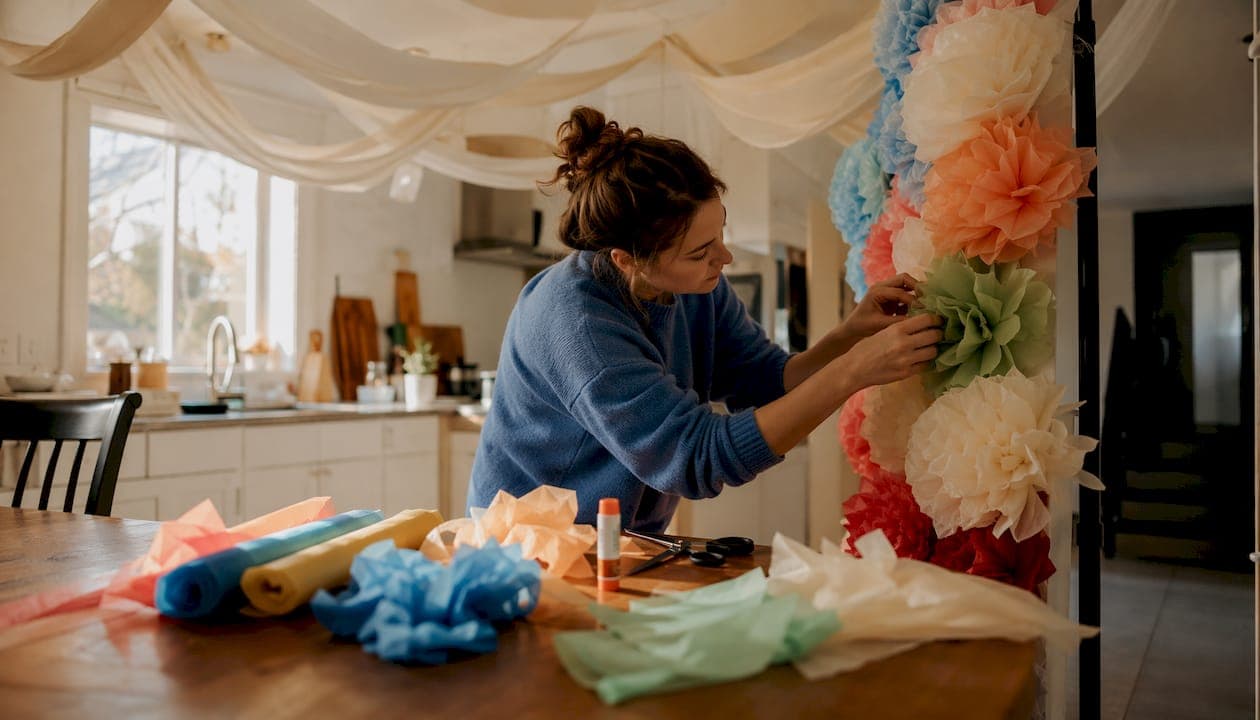
The best examples of creative photo backdrops share one trait: they cost almost nothing but look like they cost a lot. A crepe paper streamer wall assembled in minutes for just a few dollars, a metallic fringe curtain that guests photograph themselves in front of all night, a corrugated metal sheet spray-painted in a bold color — these are the ideas that actually get used, reused, and shared.
12 Creative photo backdrop examples to inspire your next shoot
- Crepe paper streamer wall. Tape rolls of crepe paper vertically across a blank wall, alternating colors. Assembly takes only a few minutes and requires minimal supplies.
- Tissue paper flower installation. Cut and layer tissue paper into oversized blooms, then mount them on a foam board or directly on the wall. A full backdrop comes together in under an hour.
- Metallic fringe curtain. Gold or silver tinsel panels hang from a tension rod and catch light beautifully. They work for New Year's Eve, glam portraits, or product shots needing a reflective surface.
- Balloon garland. Mix sizes and colors, weave in greenery, and you have a festive backdrop that photographs well at any focal length.
- Geometric paper shapes. Cut triangles, hexagons, or diamonds from cardstock and arrange them in a pattern on a foam board. The result reads as modern and editorial.
- Fabric drape panels. Sheer or velvet fabric hung from a rod creates an elegant, soft-focus background ideal for portraits and wedding detail shots.
- Paper flower wall. Layer colored craft paper petals on a foam board for a vibrant, textured surface that photographs beautifully for weddings or baby showers.
- Faux greenery wall. Attach artificial leaves and vines to a mesh panel. It mimics a garden wall without any wilting, and stores flat between shoots.
- Vintage vinyl record wall. Arrange records in a grid pattern on the wall. The circular shapes create visual rhythm, and the reflective surface responds interestingly to directional light.
- Post-It note grid. No adhesive, no tools, no cost beyond the notes themselves. Arrange them in a gradient or random color pattern for a playful, graphic backdrop.
- Chalkboard with hand-drawn doodles. A painted chalkboard panel lets you customize the backdrop for every shoot, from graduation announcements to product launches.
- Botanical boho living wall. Hang potted trailing plants or a mix of dried pampas grass and eucalyptus from a wooden dowel. The organic texture reads beautifully in natural light.
DIY backdrop ideas that work in small spaces
Small spaces reward compact, foldable solutions. A shower curtain or wallpaper panel fits a studio apartment just as well as a dedicated photo room, and both roll up for storage in seconds. Adhesive vinyl sheets, available for around $6 at discount stores, apply to both sides of a wooden board, doubling your backdrop options while halving your storage footprint.
- Collapsible fabric panels on a lightweight stand fold flat and set up in under two minutes.
- Adhesive vinyl sheets on plywood give you two distinct looks from one board.
- Wallpaper panels peel, stick, and remove cleanly from most walls without damage.
- Tension rod fabric drapes install in a doorframe or window alcove with no hardware.
- Paper cutout panels on foam board lean against any surface and store behind a door.
Pro Tip: In a tight space, layer a simple fabric panel in the background with a small paper or floral element closer to the subject. The depth between the two layers creates dimension that a single flat backdrop cannot, and it photographs as a much larger, more complex setup than it actually is.
How texture and thematic design make backdrops more compelling
Texture does something flat color cannot: it gives the camera something to find at every focal length. A corrugated metal sheet spray-painted in a vibrant color produces a surface that looks entirely different at f/1.8 versus f/8. Adhesive tile decals with hand-painted grout lines read as authentic vintage tile in product photography. Sand mixed with PVC glue and layered onto a plywood board brings genuine beach texture to a studio shot without the logistics of an outdoor location.
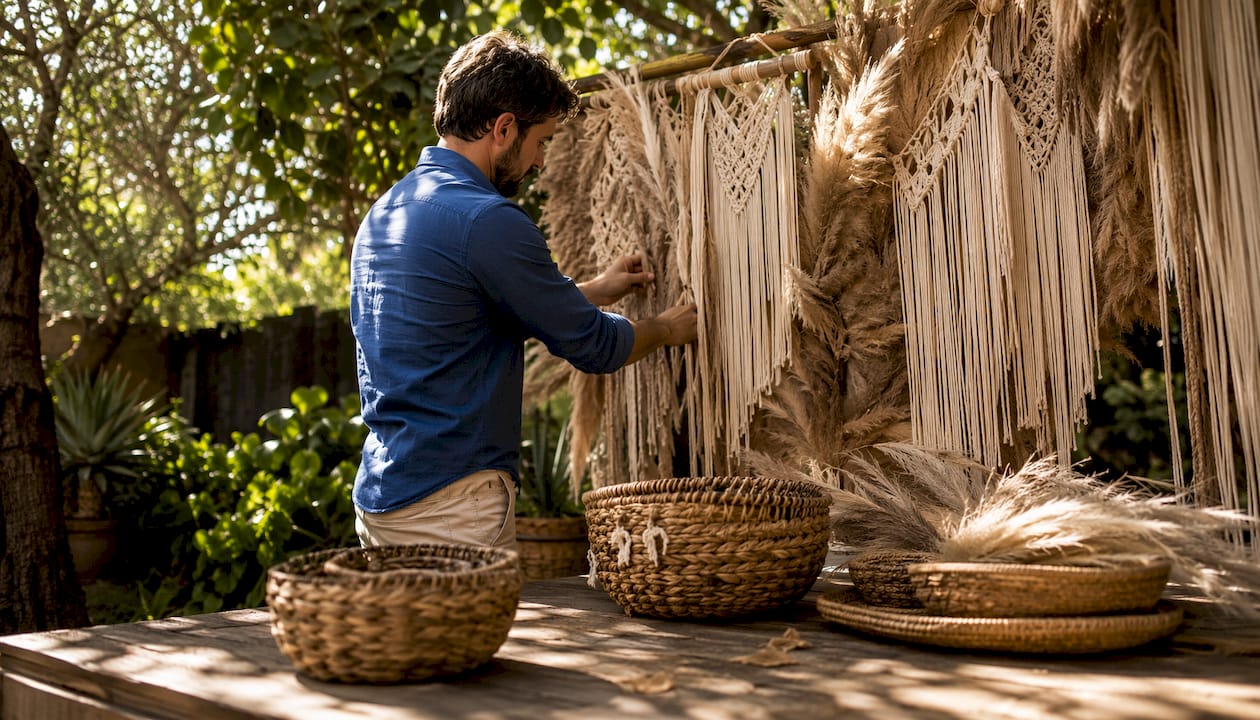
Thematic coherence matters just as much as raw texture. A bohemian backdrop built from macramé, pampas grass, and warm earth tones tells a consistent visual story. A vintage look assembled from old book pages, distressed wood panels, and muted tones does the same. When the backdrop's materials, colors, and motifs all point in the same direction, the subject reads more clearly against it rather than competing with it.
Seasonal themes are among the most practical applications. A holiday backdrop built from pine branches, fairy lights, and kraft paper works for December family portraits and product shots alike. A tropical setup using palm leaf cutouts and bright coral fabric serves summer events and lifestyle product photography. The key is choosing one thematic anchor and letting every material choice support it.
What professional photographers say about choosing backdrops
The single most useful piece of advice from working photographers is also the simplest: match the backdrop to the shoot's purpose before you think about aesthetics.
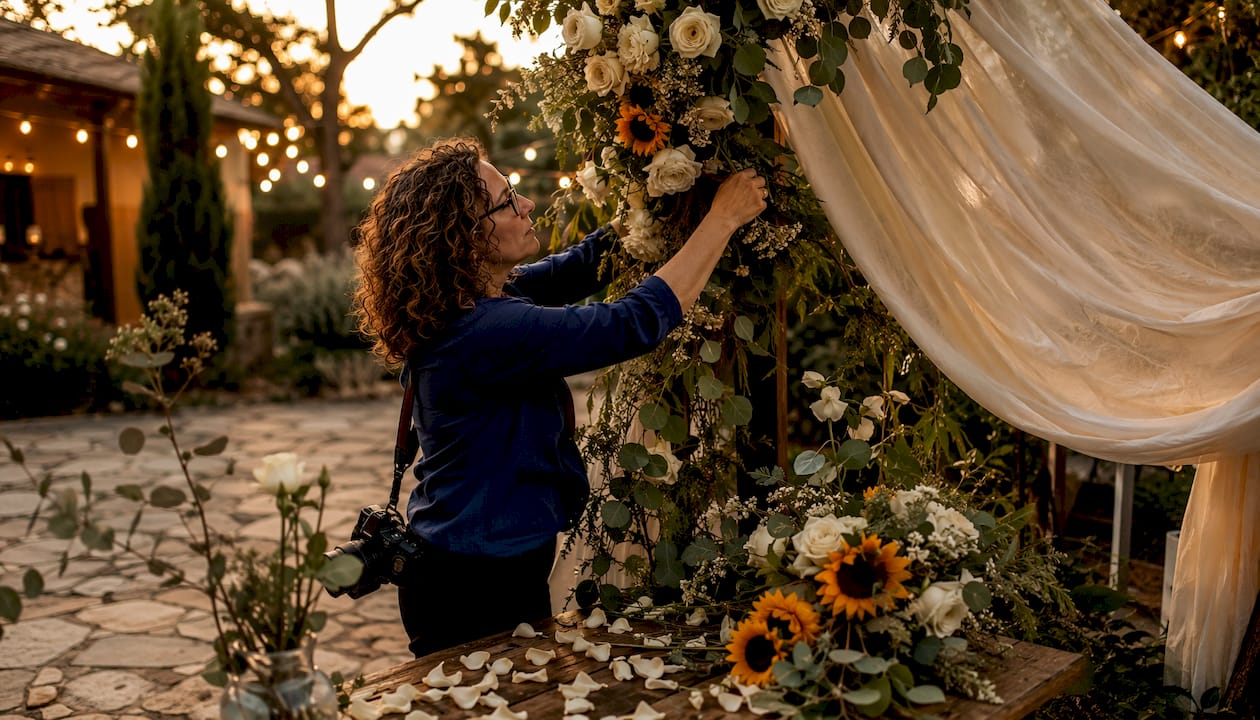
Expert photographers recommend tailoring backdrop type to event mood: playful, quick setups for casual events, polished textures for professional portraits. For branded event photography, professionals layer materials such as wood, metal, and fabric to add depth and reinforce brand identity through cohesive color palettes rather than flat printed banners. Professional photos consistently show that backdrop color choices shape viewer perception before the subject even registers.
A few principles that experienced photographers apply consistently:
- Cool, neutral backgrounds keep the viewer's eye on the subject in product and headshot work.
- Bold textures and warm tones create mood and emotional weight in lifestyle and event photography.
- Interactive elements such as LED walls or AR features, increasingly common at corporate events, turn the backdrop into an experience rather than a surface.
- Logo placement above, engagement elements below is the standard zone structure for branded event backdrops, keeping the brand visible from a distance while QR codes and detail panels serve guests up close.
For wedding backdrop ideas specifically, elegant draped fabrics and floral arches consistently outperform busier designs because they complement rather than compete with the couple.
How to assemble and hang backdrops securely
The right hanging method depends entirely on the backdrop material. Fabric panels and metallic fringe work best on a dedicated backdrop stand, which keeps them taut and positions them at any height. Tension rods handle lighter fabric and paper options in doorframes or between two walls without any wall damage.
For DIY boards, plywood or fiberboard is the recommended base for most projects. It is sturdy enough to hold tiles, sand, or joint compound, thin enough to store vertically, and light enough to move between locations. Adhesive hooks rated for the board's weight handle wall mounting cleanly.
- Fabric and fringe: backdrop stand or tension rod, clamps for extra security.
- Plywood boards: adhesive hooks or a simple ledge shelf leaning against the wall.
- Paper and foam board panels: removable adhesive strips or a leaning setup against a baseboard.
- Living walls and greenery panels: S-hooks on a curtain rod or a freestanding grid panel.
Lighting transforms how any backdrop reads on camera. High-key setups with soft, even light flatten texture and brighten the overall tone. Low-key lighting with a single directional source pulls out every ridge and surface detail, making textured backdrops look dramatically more dimensional. Store fabric backdrops rolled rather than folded to prevent crease lines that catch light unevenly. Plywood boards stack flat and wipe clean; vinyl surfaces need only a damp cloth between uses.
Tips for photographing subjects with your backdrop
Distance between subject and backdrop is the most overlooked variable in portrait work. Placing the subject at least three feet from the backdrop prevents their shadow from falling on it and allows the background to fall slightly out of focus, which separates the two planes visually. For stunning couple portraits, this separation is what gives the image depth rather than a flat, pasted-on look.
Aperture choice shapes how much backdrop detail reads in the final image. A wide aperture (f/1.8 to f/2.8) renders texture as a soft suggestion, keeping attention on the subject's face. Stopping down to f/5.6 or f/8 brings the backdrop into sharper focus, which works well when the backdrop itself is the visual point, as with a detailed tile or geometric paper design.
Lighting the backdrop independently from the subject gives you full control over both. A small speedlight aimed at the backdrop from the side rakes across texture and makes it pop. Colored gels on that same light shift the backdrop's apparent color without changing a single physical element. For photography lighting techniques that work across backdrop types, a two-light setup with one on the subject and one on the backdrop covers most situations cleanly.
Key Takeaways
The most effective DIY backdrops combine low-cost materials with intentional texture, thematic coherence, and proper subject-to-backdrop distance.
| Point | Details |
|---|---|
| Start with affordable materials | Crepe paper, adhesive vinyl for about $6, and plywood boards cover most DIY backdrop needs. |
| Match backdrop to shoot purpose | Festive balloon garlands suit events; draped fabric and floral arches serve weddings and portraits. |
| Use plywood as your base | Plywood or fiberboard supports tiles, sand, paint, and vinyl while staying lightweight and easy to store. |
| Separate subject from backdrop | At least three feet of distance prevents shadows and creates natural depth in the final image. |
| Light backdrop independently | A side-aimed speedlight or colored gel transforms texture and backdrop color without changing any physical element. |
Ready to see what a professional eye brings to backdrop selection and portrait composition? Larsonprophotography works with couples and small businesses across San Antonio to create images that hold up for decades. View our client work or explore our engagement photography sessions to see how the right backdrop and lighting come together in a real shoot.