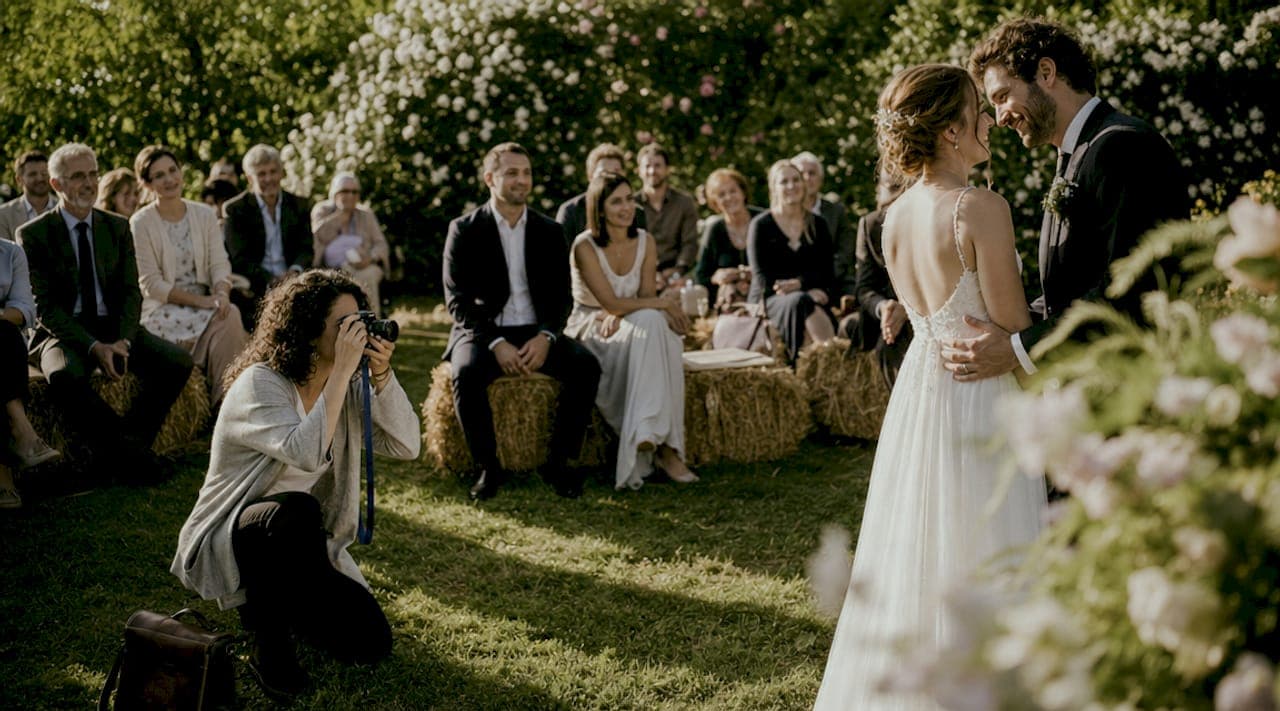
Intimate wedding photography is the art of capturing unposed, emotionally honest moments at small-scale ceremonies where connection takes priority over spectacle. Unlike traditional weddings, where photographers manage crowds and coordinate large group shots, intimate wedding photography, known in the industry as micro wedding photography, focuses on the raw, real story of two people and their closest circle. Micro weddings typically include between 2 and 30 guests, which means every glance, tear, and laugh is visible and documentable. Photographers like Alessio Bazzichi and Jamie Tobin have shaped how the industry approaches this style, emphasizing organic storytelling over choreographed coverage.
What is intimate wedding photography, and how does it work?
Intimate wedding photography is a documentary-leaning approach that treats your wedding as a living story rather than a series of scheduled shots. The photographer's job is to disappear into the event, capturing moments as they happen rather than directing them. Because guest counts are small, typically under 30, there is nowhere to hide awkward staging or missed emotional beats. Every frame counts, and the best photographers in this space know it.
Intimate weddings are a deliberate, luxurious choice that prioritizes meaningful experience over guest volume. That framing matters for photography because it changes what the photographer is looking for. Instead of scanning a crowd for reactions, they are watching two people, a handful of family members, and the details that define the day. The result is a gallery that feels personal rather than generic.
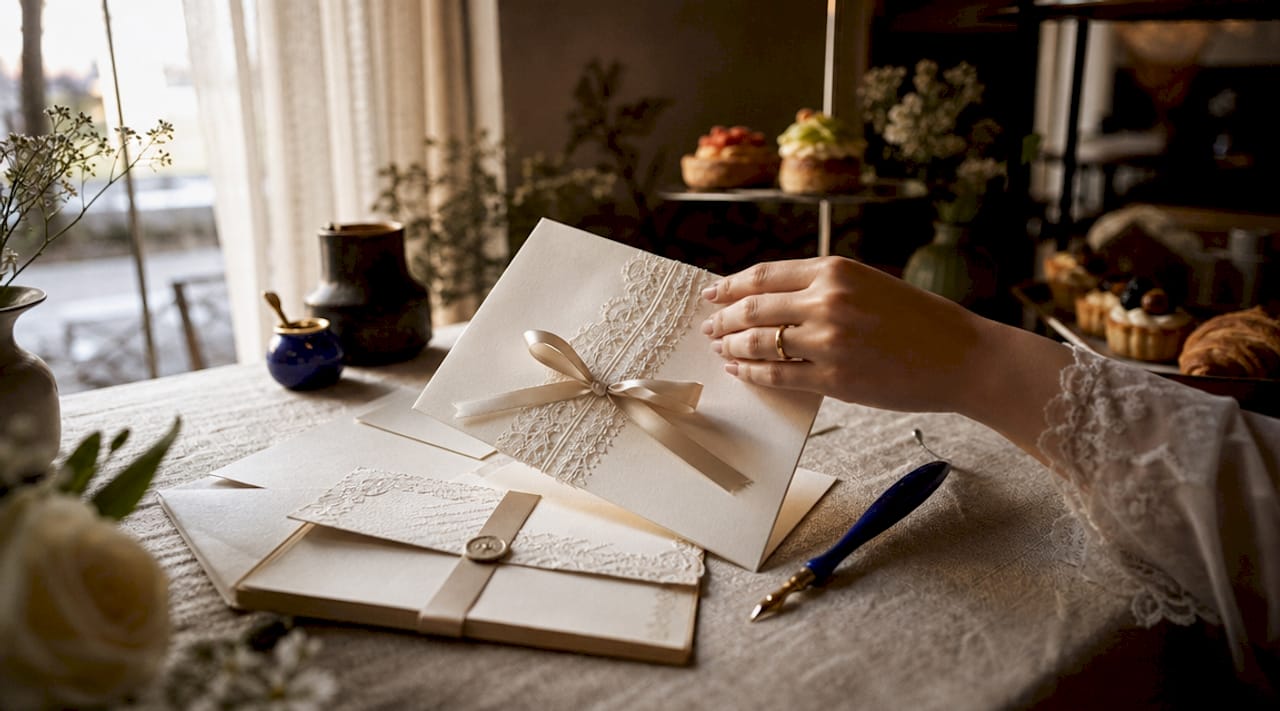
Coverage for micro weddings typically starts at around 3-hour base packages, which is enough to cover ceremony highlights, candid guest interactions, and couple portraits without requiring all-day commitment. This shorter window demands a photographer who plans carefully and shoots with intention from the first minute.
How intimate photography differs from traditional wedding photography
The differences between intimate and traditional wedding photography go deeper than guest count. They affect atmosphere, pacing, creative freedom, and the photographer's entire approach to the day.
| Factor | Intimate wedding photography | Traditional wedding photography |
|---|---|---|
| Guest count | 2 to 30 guests | 100 or more guests |
| Photographer visibility | Highly visible, integrated | Easier to blend into crowd |
| Primary style | Documentary, candid | Mix of posed and candid |
| Schedule flexibility | Relaxed, organic pacing | Rigid, time-blocked |
| Emotional intensity | High, concentrated | Spread across many moments |
| Creative freedom | Greater location and portrait flexibility | Limited by logistics and crowd |
At a large wedding, a photographer spends significant time on crowd management, coordinating family groups, and moving between venues. At an intimate wedding, that logistical weight disappears. Intimate weddings often feature a slower, more flexible timeline that lets moments unfold naturally, which produces richer storytelling in photographs. A spontaneous toast, a quiet moment between the couple before the ceremony, a grandparent's expression during the vows: these are the frames that define an intimate gallery.
The photographer's personality also matters far more at a small wedding. Experienced photographers integrate naturally with guests rather than remaining distant, functioning almost like an additional guest with a camera. At a 200-person reception, a photographer can move anonymously. At a 20-person dinner, every person in the room knows who they are. Compatibility with your group is not a soft preference. It is a practical requirement.
What styles and coverage options work best for intimate weddings?
Three photographic styles dominate intimate wedding photography, and each produces a distinct final gallery.
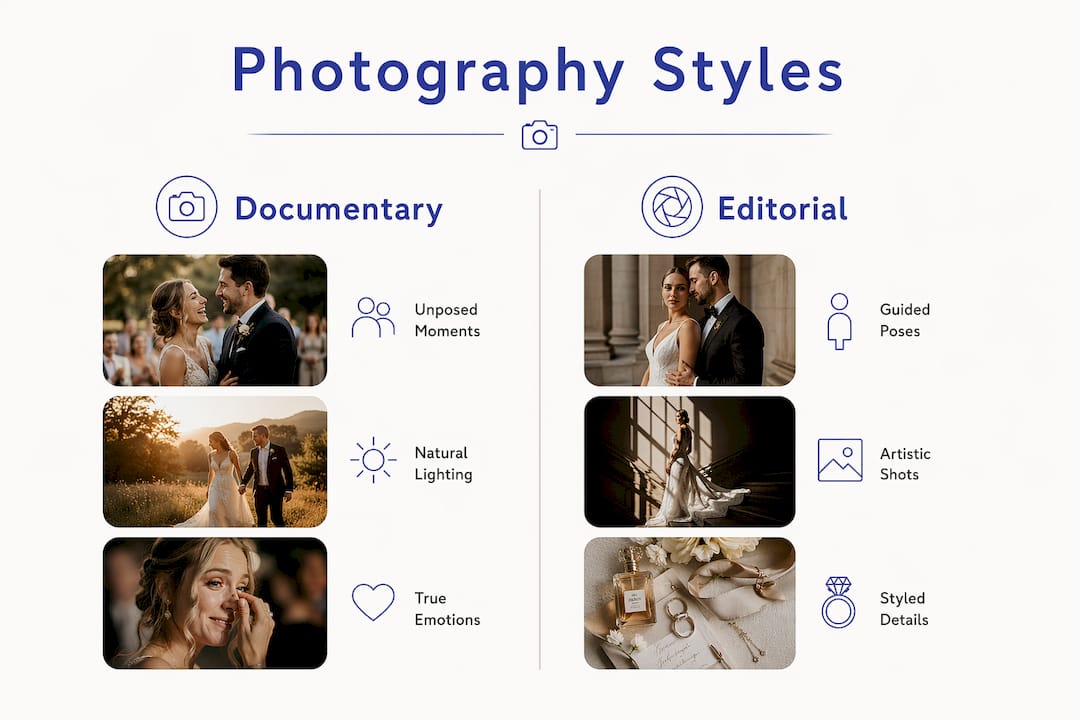
Documentary style treats the day as a news event worth recording faithfully. The photographer observes and captures without directing. This style works exceptionally well for intimate weddings because the small scale means emotional moments are concentrated and accessible. You do not need to search for feeling in a crowd. It is right in front of the lens.
Editorial style blends documentary observation with intentional portrait direction. The photographer may guide the couple into a particular light or location, then step back and let genuine interaction take over. Think of it as the difference between a photojournalist and a magazine photographer. Both value authenticity, but the editorial approach adds a layer of visual polish.
Candid style, which overlaps significantly with documentary, prioritizes unguarded moments above all else. If you want to understand what candid photography means in practice, it is the shot of your mother wiping a tear before you notice her, or your partner laughing at something only you said. These are the images couples return to most.
Coverage packages for intimate weddings typically include:
- Ceremony coverage from processional to recessional
- Candid guest interactions during cocktail hour or reception
- Couple portraits at a chosen location on or near the venue
- Getting-ready photos as an add-on or included in extended packages
Pro Tip: Do not skip getting-ready photos. Professional photographers recommend setting aside at least 1 hour per partner for preparation coverage. These frames capture the emotional buildup before the ceremony and often become some of the most treasured images in the entire gallery.
How to plan your intimate wedding photography
Planning photography for a micro wedding requires a different mindset than planning for a large event. The stakes per moment are higher because there are fewer moments to capture overall. Photographers must anticipate emotional moments proactively during intimate weddings due to fewer filler events and smaller guest lists. That means your planning directly affects what they can deliver.
Follow these steps to set your photographer up for success:
- Choose a photographer whose personality fits your group. Review their portfolio for intimate or small wedding work specifically. A photographer who excels at 300-person ballroom weddings may not have the quiet presence and documentary instincts your micro wedding needs.
- Build a detailed shot list for family and group portraits. A shot list is even more essential for intimate weddings to avoid wasting time and to capture every important guest efficiently. List every combination you want: parents with the couple, siblings together, grandparents separately.
- Plan at least 1 hour per partner for getting-ready coverage. Rushed preparation photos look rushed. Give your photographer time to work without pressure.
- Choose your venue with photography in mind. Intimate weddings benefit from unique venues like private estates, small chapels, and garden settings that are inaccessible or impractical for large groups. These locations offer creative backdrops that larger weddings simply cannot use.
- Share your timeline with your photographer at least two weeks before the wedding. Photographers who specialize in intimate work often fulfill hybrid roles involving logistical planning and creative direction, including venue scouting and timeline design. Let them contribute to the schedule.
Pro Tip: Introduce your photographer to your guests before the ceremony begins. When guests know who the photographer is and feel comfortable with them, their behavior in front of the camera becomes more natural. This single step produces noticeably more authentic candid shots throughout the day.
Why intimate wedding photography produces stronger emotional results
Presence-focused photography in intimate weddings captures authentic emotions more effectively than large-event photography. The reason is structural. When you remove the crowd, the performance pressure disappears with it. Couples at large weddings are often aware of being watched by 150 people. Couples at intimate weddings forget the camera exists because they are absorbed in the people they love most.
This shift from performance to presence produces portraits that feel genuinely unguarded. A bride laughing with her three closest friends looks different from a bride smiling for a crowd. The former is a memory. The latter is a record.
Creative freedom also expands significantly at small weddings. A photographer working with 20 guests can move the couple to a private corner of the venue, use natural light from a window, or spend 20 minutes on portraits without abandoning a crowd. That flexibility produces images with more visual variety and emotional depth than a tightly scheduled large wedding allows.
"The intentional choice of intimacy over scale results in more meaningful and luxurious wedding experiences and images." — Jamie Tobin Photography
The details also become more prominent in intimate wedding photos. A hand-written vow card, a specific flower in the bouquet, the texture of a grandmother's dress: these elements get screen time because the photographer is not managing logistics. For couples who want a gallery that tells a complete, layered story, the intimate format delivers results that natural wedding photos from large events rarely match.
Key takeaways
Intimate wedding photography produces its strongest results when couples treat it as a deliberate creative choice rather than a scaled-down version of traditional coverage.
| Point | Details |
|---|---|
| Define your guest count early | Intimate weddings with 2 to 30 guests require a different photography approach than large events. |
| Prioritize documentary style | Candid and documentary photographers capture the concentrated emotion of small weddings most effectively. |
| Plan getting-ready time | Allocate at least 1 hour per partner for preparation photos to capture emotionally rich pre-ceremony moments. |
| Build a shot list | A detailed list of family and group portrait combinations prevents missed moments and wasted time. |
| Choose venues creatively | Small guest counts open access to private estates and intimate spaces that produce distinctive photographic settings. |
Why I think intimate weddings are the most rewarding work I do
I have photographed weddings across a wide range of sizes, from 300-person ballroom receptions to ceremonies with eight guests in a backyard. The intimate ones stay with me longest. Not because they are easier. They are actually harder in one specific way: there is no crowd to hide behind when a moment passes. You either caught it or you did not.
What I find consistently true is that couples at small weddings are more present. They are not managing a guest list or worrying about whether the caterer reached table 14. They are actually in the room, feeling what is happening. That presence transfers directly into photographs. The images look different. They feel different.
My honest recommendation for any couple considering this format: stop thinking of it as a smaller wedding and start thinking of it as a more focused one. The photography reflects that focus. You will end up with a gallery where nearly every image means something, rather than a large gallery where you skip past the crowd shots to find the ones that matter.
— Todd
How Larsonprophotography can document your intimate wedding
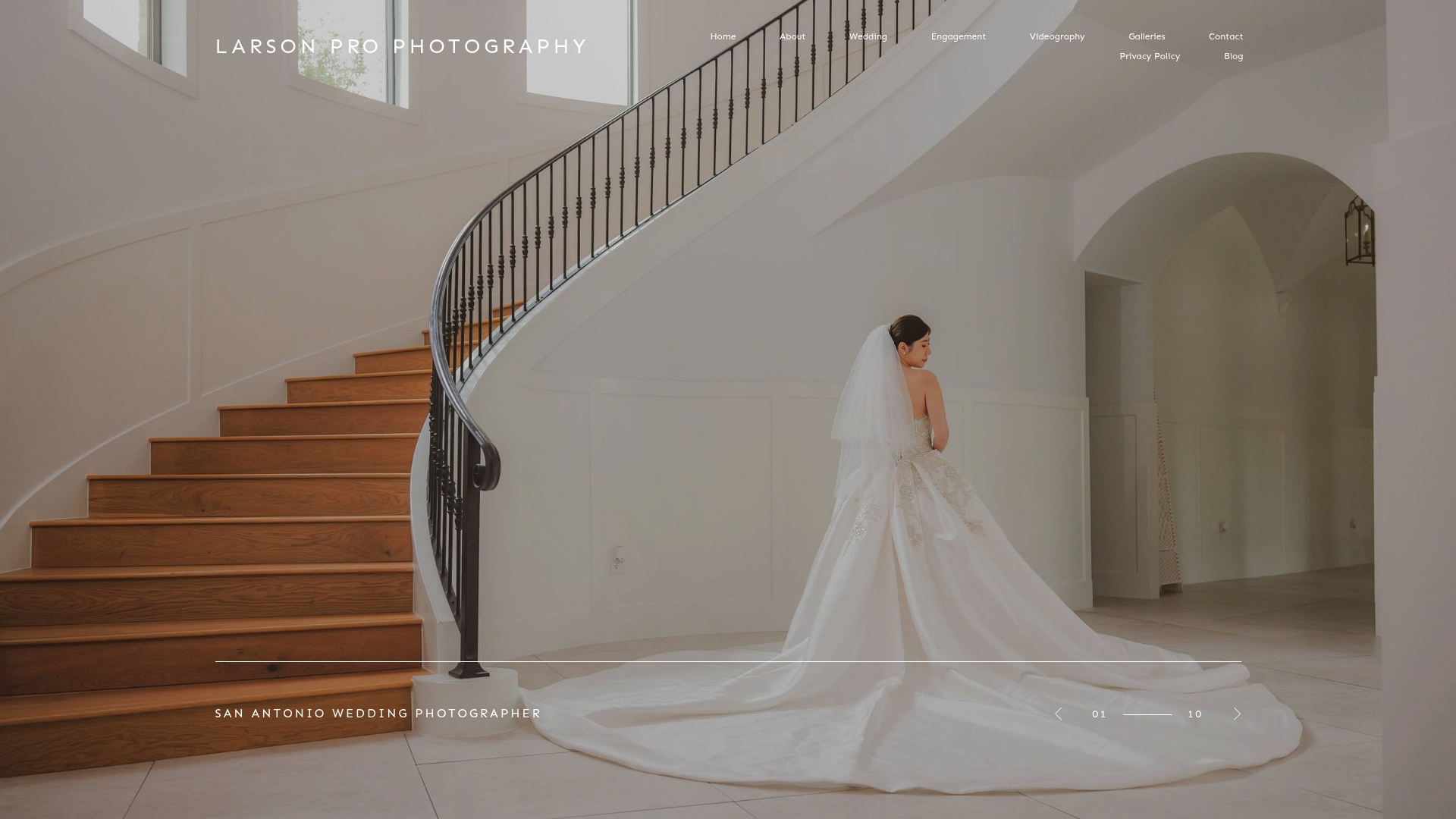
Larsonprophotography specializes in wedding photography for couples in San Antonio who want coverage that feels personal and true to their day. For intimate and micro weddings, the team offers flexible packages starting at 3-hour coverage blocks, designed specifically for small ceremonies where every moment carries weight. Whether you are planning a private estate ceremony, a small chapel exchange, or a garden celebration with your closest people, Larsonprophotography brings a documentary approach that lets your story unfold without interruption. Browse the full range of wedding photography services to see recent intimate wedding galleries and learn about availability. Reach out directly to discuss a custom timeline built around your specific day.
FAQ
What is a micro wedding, and how does it differ from an elopement?
A micro wedding typically includes between 2 and 30 guests and follows a traditional ceremony structure, while an elopement usually involves fewer than 10 to 15 people and often skips formal ceremony elements entirely. Both benefit from intimate photography approaches, but micro weddings generally require more coverage time due to guest interactions and group portraits.
How long does intimate wedding photography coverage typically last?
Standard intimate wedding photography packages start at approximately 3 hours, covering the ceremony, candid guest moments, and couple portraits. Couples who want getting-ready photos should add at least 1 hour per partner to that baseline.
What photography style works best for intimate weddings?
Documentary and candid photography styles produce the strongest results for intimate weddings because they capture concentrated emotional moments without staged direction. Editorial style works well for couples who also want polished couple portraits alongside natural coverage.
Do I still need a shot list for a small wedding?
A shot list is more important at a small wedding than at a large one. With fewer guests and a tighter schedule, there is less buffer time to organize family groupings on the fly. A prepared list keeps portraits efficient and makes sure no important combination is missed.
Can intimate wedding photography work at any venue?
Intimate wedding photography works at virtually any venue, and small guest counts actually expand your venue options. Private estates, small chapels, rooftops, and garden spaces that cannot accommodate large crowds become available, and these locations often produce the most distinctive and personal photographic settings.