Many couples assume elopement and wedding photography are simply the same service at different scales. They're not. The difference between elopement and wedding photography goes far deeper than guest count. It shapes the entire approach, the timeline, the shooting style, and the kind of images you walk away with. If you're planning an intimate ceremony in San Antonio and wondering which direction to go, this guide breaks down exactly what separates these two photography experiences so you can choose the one that truly fits your day.
Table of Contents
- Understanding elopement photography
- What defines traditional wedding photography
- Comparing elopement and traditional wedding photography
- Which photography style suits your San Antonio intimate ceremony?
- Planning and working with elopement versus wedding photographers
- Why elopement photography is reshaping wedding storytelling
- Capture your special day with Larson Pro Photography
- Frequently asked questions
Key Takeaways
| Point | Details |
|---|---|
| Elopement photography intimacy | Elopement photography captures intimate, personal moments with minimal guests and flexible timelines. |
| Traditional wedding coverage | Traditional wedding photography documents the full event with structured timelines and guest interactions. |
| Cost and experience differences | Elopements generally cost less and focus on privacy and storytelling, while weddings involve more guests and comprehensive event coverage. |
| Choosing based on priorities | Select photography style based on your desired guest count, event structure, and personal comfort with spontaneity or scheduling. |
| Photographer role varies | Elopement photographers often guide logistics and creative direction more closely compared to traditional wedding photographers. |
Understanding elopement photography
Elopement photography focuses on intimate, meaningful ceremonies often in unique locations, prioritizing emotional storytelling over formal posed shots. That's a meaningful shift from what most people picture when they think "wedding photography." Rather than managing a crowd, an elopement photographer is entirely focused on the two of you.
What is elopement photography in practice? Picture a couple exchanging vows at sunrise on the Riverwalk, in a wildflower field outside the city, or in a quiet San Antonio courtyard. No seating charts. No photographer running between tables. Just two people and a lens locked in on every genuine, unguarded moment between them.
Here's what typically defines the elopement photography experience:
- Small or no guest list. Usually just the couple, sometimes with a handful of close family or friends.
- Location-driven creativity. Outdoor and scenic settings play a major role. The environment becomes part of the story.
- Documentary style. Images lean candid and emotional, not staged.
- Flexible timelines. Shooting schedules bend around golden hour, weather, and the couple's pace.
- Photographer as guide. Your photographer often helps with location logistics, light timing, and even permit requirements.
That last point surprises most couples. An elopement photographer isn't just someone who shows up with a camera. They scout locations, track weather windows, and advise on timing to make sure conditions line up. It's part creative director, part local guide.
Pro Tip: If you're leaning toward an elopement, check out these natural wedding photos tips to understand how authentic moments get captured without forced posing.
Now that we know what elopement photography is, let's explore traditional wedding photography to understand the contrast.
What defines traditional wedding photography
Traditional wedding photography is built around covering an entire event, not just a ceremony. Full wedding coverage includes receptions, speeches, and extensive group photos, aiming to tell the full story of the day. That's the core mission: document everything.
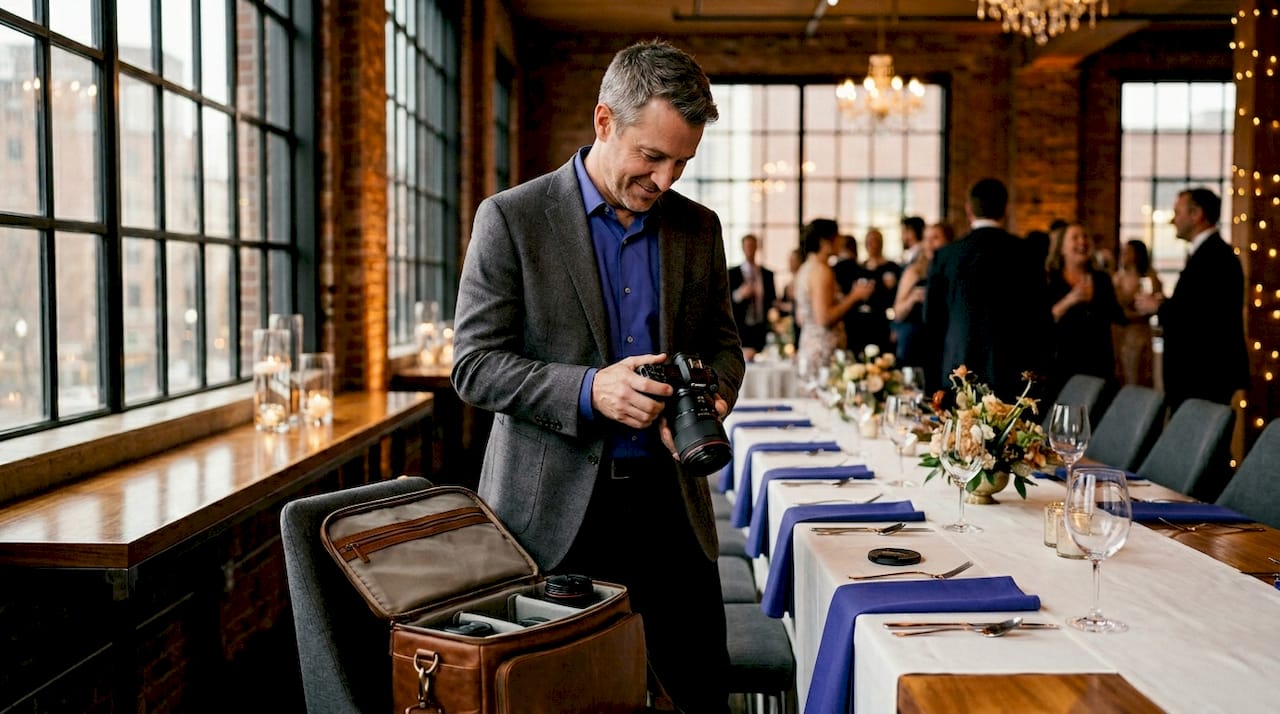
Think about what that actually involves. A traditional wedding photographer arrives before the ceremony for getting-ready shots, covers the vows, coordinates family portraits, moves through cocktail hour, and shoots the reception from first dance to final song. That can easily stretch to eight or ten hours.
Key characteristics of traditional wedding photography include:
- Large guest coverage. Family formals, wedding party shots, and crowd moments are all expected deliverables.
- Structured timeline. Every shot has a time slot, often coordinated with a planner or venue coordinator.
- Mixed shooting style. A balance of posed portraits and candid moments throughout the day.
- Comprehensive storytelling. The goal is to document the full arc of the celebration, not just the emotional highlights.
Understanding candid vs posed photos becomes especially relevant here, because traditional wedding photography requires both. A skilled wedding photographer transitions between directing formal groups and stepping back to catch genuine reactions, often within minutes of each other.
With both definitions clear, let's compare these photography styles side-by-side to highlight their key differences.
Comparing elopement and traditional wedding photography
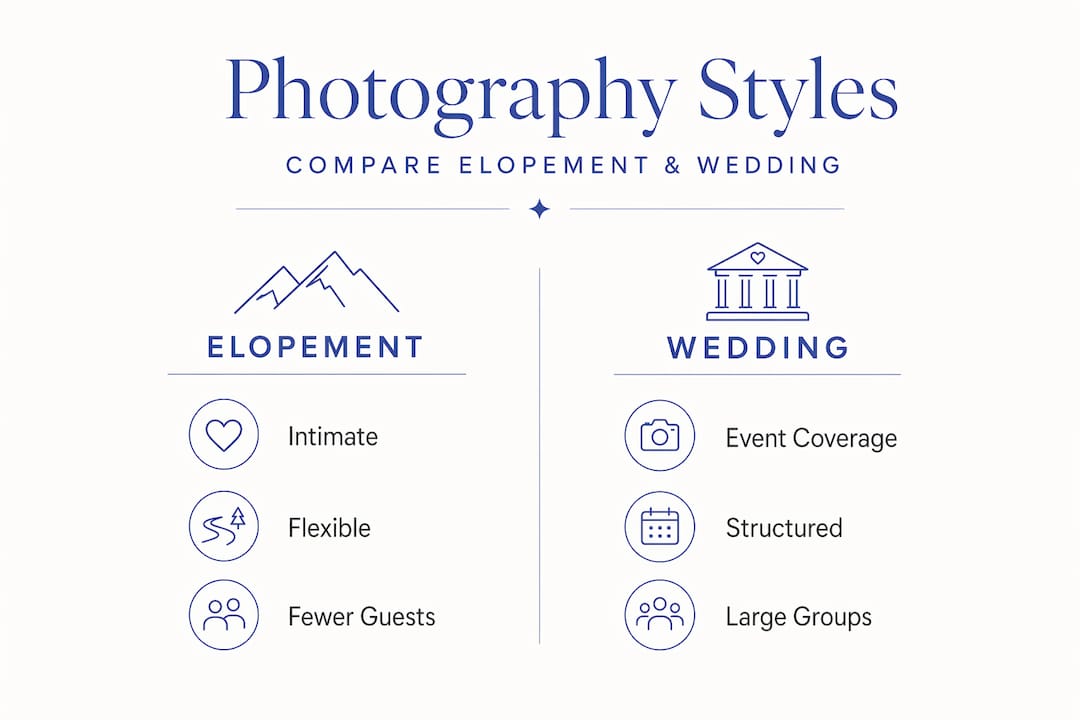
Here's where elopement photography vs wedding photography gets concrete. The differences aren't subtle.
| Factor | Elopement photography | Traditional wedding photography |
|---|---|---|
| Guest count | Couple only or very few | Large, structured groups |
| Shooting style | Candid, documentary | Mixed posed and candid |
| Timeline | Flexible, experience-driven | Structured, schedule-dependent |
| Location | Outdoors, scenic, adventurous | Venues, chapels, reception halls |
| Coverage length | Typically shorter | Full-day, often 8 to 10 hours |
| Cost | Generally lower | Higher due to extended coverage |
| Primary focus | Emotional connection | Full event documentation |
Elopements often cost less overall while prioritizing privacy and flexibility, while traditional weddings involve more guests, formal structure, and comprehensive storytelling. That budget difference matters more than people expect. When you're not paying for reception coverage, multiple shooters, and hours of formal portraits, that money can go directly into choosing a better location, booking a more experienced photographer, or investing in fine art prints.
The differences in wedding and elopement photography also show up in how images feel. Elopement galleries tend to look more like editorial travel photography. Traditional wedding galleries feel more like family albums, warm, inclusive, and built to be shared.
Pro Tip: Before your consultation, review wedding photography trends to get a feel for the visual styles you're drawn to. It helps your photographer understand your vision from the first conversation.
Now that we've compared these styles, let's explore how to decide which photography option fits your unique San Antonio ceremony.
Which photography style suits your San Antonio intimate ceremony?
Choosing between these two isn't about which is better. It's about which one fits your actual day. Couples who want privacy and a relaxed pace often prefer elopement photography, whereas those valuing a structured event with guest interaction lean toward wedding photography.
Work through these four questions to get clarity:
- How large is your guest list? If it's under ten people or just the two of you, elopement photography will serve you far better. Once guests exceed that number, traditional wedding coverage starts making more sense.
- How much event coverage do you need? If your celebration includes a reception, toasts, or dinner, you'll want a photographer experienced in full-event documentation.
- How do you feel about structured timelines? Some couples thrive with a shot list and schedule. Others find it stressful. Elopements give you room to breathe and be present.
- How are you allocating your budget? If photography is the priority and you'd rather minimize other expenses, an elopement often makes that math work in your favor.
Pro Tip: Even if you're planning a small ceremony, booking an engagement session beforehand helps you get comfortable in front of the camera and builds trust with your photographer before the big day.
With this guidance, you can make an informed choice that best captures your wedding day memories.
Planning and working with elopement versus wedding photographers
The practical differences between these two photography types show up long before the wedding day itself.
Elopement photographers provide guidance on logistics such as terrain, lighting, and weather, acting as both artist and planner. That means your conversations before the session cover more than just shot preferences. You're discussing sunrise versus sunset, whether a location requires a permit, and what happens if it rains.
Here's how the planning process differs between the two:
- Elopement photographers: Focus on location scouting, seasonal light conditions, weather windows, and keeping the experience spontaneous within a loose framework.
- Traditional wedding photographers: Coordinate with planners, venues, and often a second shooter. They build detailed timelines and manage the logistics of moving large groups efficiently.
- Both require: Clear communication about must-have moments, your visual style preferences, and any cultural or personal traditions important to you.
| Planning element | Elopement photography | Traditional wedding photography |
|---|---|---|
| Timeline creation | Loose, adjusted on the day | Detailed, shared with planner |
| Location logistics | Extensive pre-planning | Venue-led, usually straightforward |
| Second shooter | Rarely needed | Often recommended |
| Permits | May be required | Rarely an issue |
| Communication style | Collaborative and flexible | Structured and schedule-focused |
For couples considering outdoor or destination wedding photography, many of the same elopement planning principles apply regardless of what you call your ceremony.
Understanding the planning differences prepares you to engage effectively with your chosen photographer to get the best photos.
Why elopement photography is reshaping wedding storytelling
Here's the honest take after working with couples on both sides of this conversation. Elopement photography isn't just a different service. It's a different philosophy about what a wedding is actually for.
Elopement photography shifts focus from obligations and crowd management to authentic connection and emotional storytelling, making the experience uniquely personal and freeing for couples. That freedom changes everything about the images.
When couples aren't performing for a room full of guests, they stop performing for the camera too. The nervousness drops. The real expressions come through. You see genuine laughter, not practiced smiles. That's not a small difference in the final gallery. It's the entire difference.
There's also something worth naming about the creative possibilities. Traditional wedding venues constrain a photographer in real ways. You're working within the same walls, the same light, the same background as a hundred other weddings at that location. Elopements break that open. San Antonio has remarkable light in the late afternoon near the Hill Country edge, beautiful texture in the historic neighborhoods, and quiet corners along the Mission Trail that almost nobody uses as a backdrop. Elopement photography lets us actually use those spaces.
This isn't to say traditional wedding photography can't be beautiful or meaningful. It absolutely can. But if your priority is images that feel entirely, unmistakably yours, elopement photography has a structural advantage that no amount of skill can fully replicate in a ballroom.
Before your session, reviewing a wedding photography checklist helps ensure nothing important gets overlooked regardless of which style you choose.
Capture your special day with Larson Pro Photography
Whether you're drawn to the intimacy of an elopement or the full celebration of a traditional wedding, the most important thing is having a photographer who genuinely understands the difference and knows how to deliver both.
At Larson Pro Photography, we work with San Antonio couples across both photography styles, bringing local knowledge, a documentary eye, and real flexibility to every session. From selecting the right location to timing golden hour perfectly, we handle the details so you can focus on each other. Browse our wedding photography services to see our approach in full, or visit our client gallery to see actual work from couples just like you. If you're also considering an engagement session to prepare for your big day, explore our engagement photography options and let's start planning something worth keeping.
Frequently asked questions
What is the main difference between elopement and wedding photography?
Elopement photography focuses on intimate storytelling with minimal guests and flexible timelines, while wedding photography covers larger events with structured schedules, group portraits, and full reception documentation.
Can elopement photography include guests?
Yes. Elopements typically include just the couple or a very small group, usually fewer than ten people, keeping the atmosphere private and personal while still allowing a few loved ones to witness the moment.
Is elopement photography less expensive than traditional wedding photography?
Generally yes. Elopements cost less overall because they involve fewer hours of coverage, no reception or group shot logistics, and typically a single photographer, though final pricing depends on location and experience level.
How do photographers assist with elopement planning?
Elopement photographers act as guides by helping couples with location scouting, optimal lighting windows, weather contingency plans, and any permits required for shooting in protected or public spaces.
Can elopements be held in San Antonio?
Absolutely. San Antonio offers a wide range of intimate settings, from the Mission Trail and the Riverwalk to the Hill Country outskirts, all ideal for elopements with a local photographer who knows where and when the light is best.