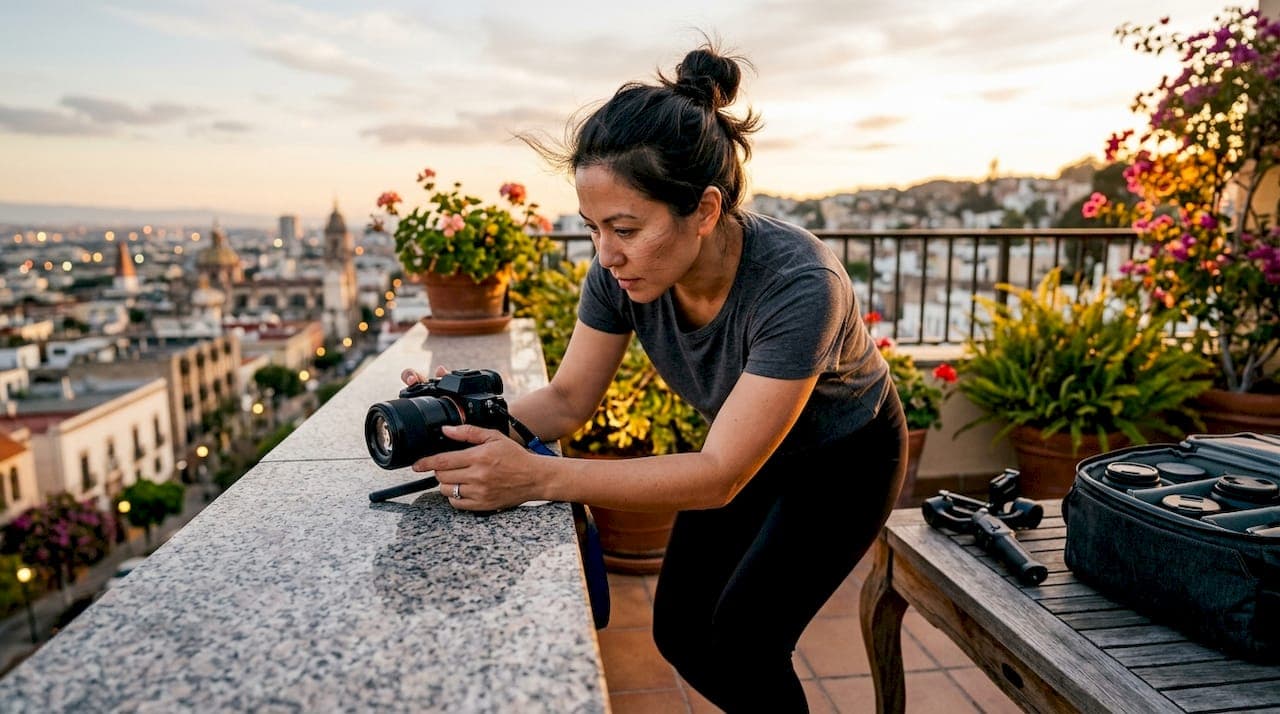
Hybrid photography is defined as the practice of capturing both high-quality still images and cinematic video during the same session, treating each medium as a complement to the other rather than a replacement. This approach has become the standard for wedding and event coverage where clients want a cohesive visual story without hiring two separate crews. Larsonprophotography uses this method to deliver still images and video highlights from a single integrated workflow. The result is consistent style, lower coordination overhead, and a final product where every photo and video clip feels like it belongs to the same story.
What is hybrid photography and how does it work technically?
Hybrid photography is a photography-first approach where video complements the primary still imagery rather than competing with it. The photographer captures sharp, high-resolution images as the core deliverable, then layers in video clips to add motion and sound to the narrative. This distinction matters because it shapes every gear decision, camera setting, and moment-by-moment priority call on the day of the shoot.
The biggest technical hurdle in hybrid shooting is shutter speed. Stills require fast shutter speeds such as 1/250s to freeze motion, while video needs a slower shutter speed equal to twice the frame rate, for example 1/50s at 25fps, to produce natural motion blur. Shooting at the wrong shutter speed for video produces a choppy, strobe-like result that looks immediately amateur. These two requirements are fundamentally incompatible in a single camera mode, which is why setting management is the core skill of hybrid shooting.
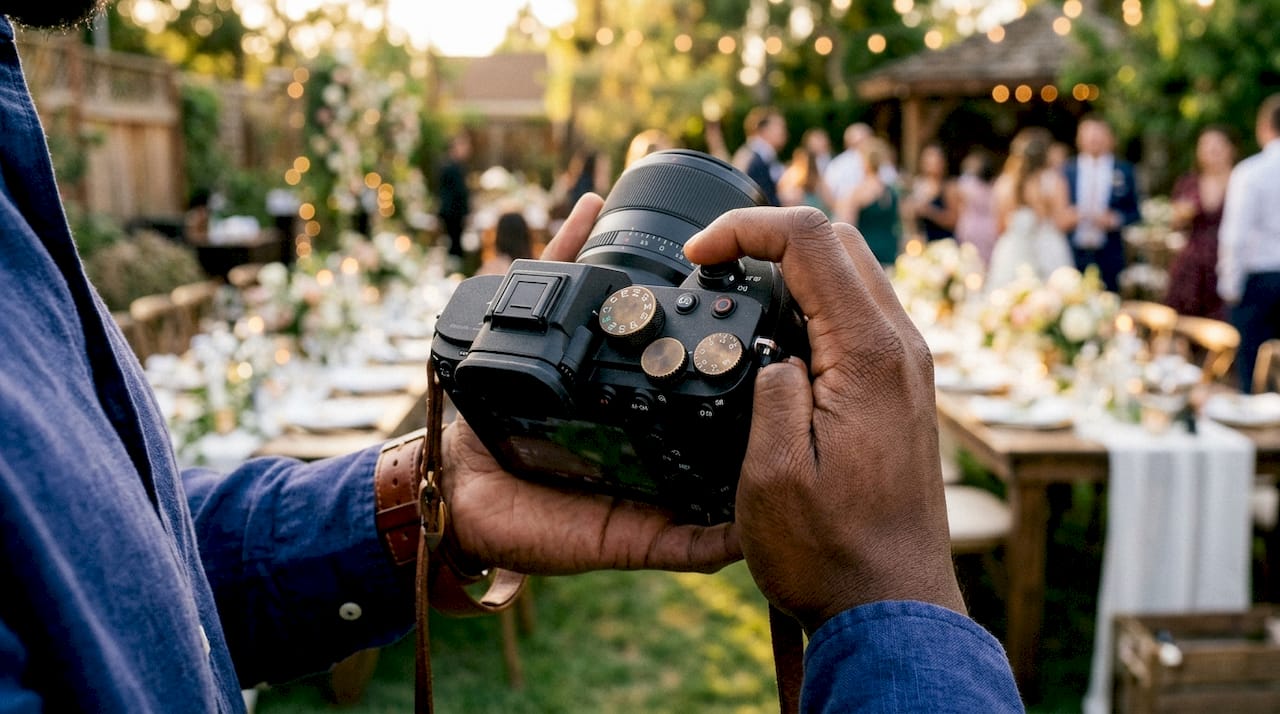
Most modern mirrorless and DSLR cameras solve this with custom shooting modes, typically labeled C1, C2, and C3 on the mode dial. A hybrid photographer programs one custom mode for stills and another for video, then switches between them in under a second without touching a menu. This workflow discipline separates photographers who dabble in video from those who deliver consistent hybrid results.
Audio: the most overlooked part of hybrid coverage
Built-in camera microphones are inadequate for professional hybrid work. They pick up camera handling noise, wind, and ambient room sound without any directional focus. Poor audio is often called the "silent killer" of hybrid projects because viewers tolerate imperfect video far longer than they tolerate bad sound.
The fix is straightforward. Mount a shotgun microphone on the camera's hot shoe for directional capture, or use a separate audio recorder placed near the speaker during ceremonies and speeches. Many hybrid photographers use both simultaneously as a backup. Quality audio transforms a video highlight from a slideshow with music into a film that actually makes people cry.
- Custom modes: Program C1 for stills and C2 for video before every shoot so you never hunt through menus during a ceremony.
- Shutter speed: Set your video mode to twice your frame rate. At 24fps, use 1/50s. At 30fps, use 1/60s.
- Audio gear: A shotgun mic on the hot shoe handles ambient sound. A lapel recorder on the officiant captures vows cleanly.
- Secondary cameras: Place an action cam or a second body on a tripod to cover key moments while you shoot stills.
- Neutral density filters: Use ND filters in bright outdoor settings to maintain the correct video shutter speed without overexposing.
Pro Tip: Set your camera's video mode to a slightly warmer white balance than your stills mode. It saves time in post when matching color grades across both mediums.
How does hybrid photography enhance storytelling?
Hybrid coverage produces visual consistency that a separate photo and video team rarely achieves. When one photographer controls both mediums, the color grade, the light choices, and the compositional style stay identical across every deliverable. A still image of the first dance and the video clip from the same moment look like they came from the same creative mind because they did.
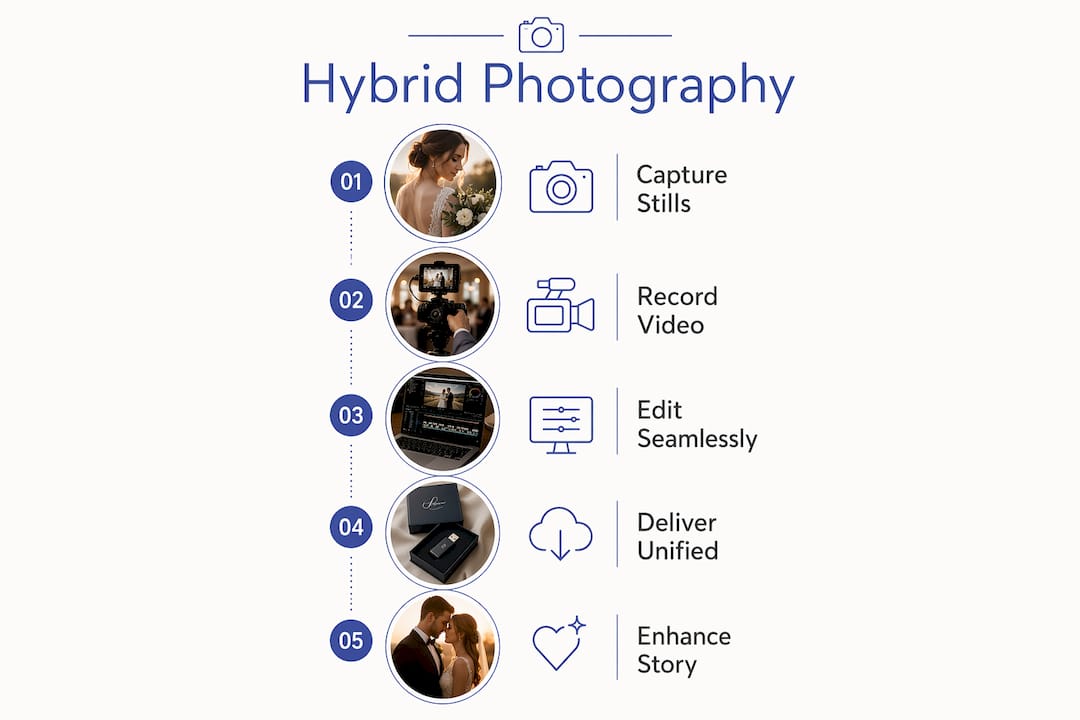
The storytelling advantages compound quickly. A wedding album tells a story through sequenced images. A highlight reel tells a story through motion and sound. When both come from the same session and the same creative vision, they reinforce each other instead of feeling like two separate products from two separate vendors. Couples who receive hybrid packages often describe the experience as getting a complete record of their day rather than two partial ones.
A smaller crew also changes the atmosphere at an event. One hybrid photographer moves through a room without the footprint of a full photo and video team. Guests relax faster. Candid moments happen more naturally. The camera becomes less of an event in itself.
Here is how hybrid photography builds a stronger narrative than split coverage:
- Unified color grading: One editing workflow means every still and every video clip shares the same tonal palette, which makes albums and reels feel like a single artistic statement.
- Reduced crew presence: A single hybrid photographer is less disruptive than a photographer plus a separate videographer, which produces more natural candid moments throughout the day.
- Emotional continuity: Still images freeze the peak of a moment. Video captures the seconds before and after. Together they give viewers the full emotional arc of a scene.
- Single point of contact: Clients coordinate with one professional instead of two, which cuts planning time and eliminates the risk of conflicting creative visions on the day.
- Consistent pacing: Because one person controls both mediums, the shooting rhythm stays steady. There are no gaps where the photographer waits for the videographer to finish a setup, or vice versa.
Hybrid packages also tend to cost less than booking separate teams. A typical hybrid wedding package includes full photo coverage alongside a 16–20 minute highlight reel and recordings of ceremonies and speeches. That scope would require at minimum two professionals if split across separate bookings.
What hybrid photography is not
Hybrid photography does not replace a dedicated videographer and was never designed to. A full cinematic wedding film involves multiple camera operators, a dedicated sound recordist, drone footage, and hours of narrative editing. Hybrid coverage produces a highlight reel and key video moments. These are different products with different scopes, and confusing them leads to disappointed clients.
The clearest way to set expectations is to define what hybrid coverage prioritizes:
- Photography is primary. The hybrid photographer's first obligation is sharp, well-exposed still images. Video is captured when it does not compromise that primary goal.
- Video is supplementary. Hybrid video output is typically a highlight reel of 3–20 minutes, not a feature-length film with multiple narrative arcs.
- Audio is selective. Hybrid audio capture focuses on key spoken moments like vows and speeches, not ambient room sound throughout the entire event.
- Editing scope is defined. Hybrid post-production covers color grading and basic cuts, not complex motion graphics or multi-camera editing timelines.
Hybrid photography doesn't aim to replicate full videography productions. It offers a streamlined storytelling service that prioritizes still images with enriching video highlights. The distinction is intentional, not a limitation.
Hybrid photography blends documentary spontaneity with lifestyle-guided direction to avoid stiff posing while maintaining authentic moments. The best hybrid photographers work at approximately 80% documentary style with 20% lifestyle-guided portraits. That ratio keeps the coverage feeling real while still producing the polished images clients expect.
Practical workflow strategies for hybrid shooting
Effective hybrid workflows require careful setting switching, audio strategy, and mental focus to maintain quality across both mediums. The mental load is the part photographers underestimate most. You are constantly evaluating whether the current moment is better served by a still or a clip, and that decision has to happen in real time without hesitation.
Here are the core workflow strategies that separate consistent hybrid shooters from those who struggle:
- Sequence your priorities. Identify the moments that must be stills (ring exchange, first kiss, cake cutting) and the moments that work best as video (processional, first dance, speeches). Plan your mode switches before the event starts.
- Use multiple cameras simultaneously for high-pressure moments. During a ceremony, one body shoots stills while a second body on a tripod rolls video continuously. This eliminates the impossible choice between the two mediums at the most critical point of the day.
- Protect your audio. Place a lapel recorder on the officiant before the ceremony starts. Do not rely on the shotgun mic alone for vows. Redundant audio capture is cheap insurance against an irreplaceable moment.
- Match your color science in-camera. Shoot video in a flat or log profile and stills in a matching neutral picture style. This makes the color grading process faster and produces a more consistent final look across both mediums.
- Edit stills first. Establish your color grade in Lightroom or Capture One, then use those settings as the reference for your video grade. This keeps the two deliverables visually unified without doubling your editing time.
Pro Tip: Shoot a short test clip and a test still at the start of each new lighting environment. Compare them on your monitor before the key moments begin. Catching an exposure mismatch early saves hours of corrective editing later.
The 2025 wedding photography trends show hybrid photo and video packages growing in demand as couples prioritize complete storytelling over separate deliverables. Photographers who build hybrid workflows now are positioning themselves ahead of that demand curve. For photographers exploring hybrid wedding packages in different markets, studying how other professionals structure their coverage and pricing provides a useful benchmark.
Key takeaways
Hybrid photography delivers the strongest results when photographers treat stills as primary, master the technical switching between mediums, and build audio capture into every workflow from the start.
| Point | Details |
|---|---|
| Photography stays primary | Stills are the core deliverable; video clips enrich but never replace them. |
| Shutter speed is the key conflict | Program custom camera modes before every shoot to switch between still and video settings instantly. |
| Audio determines video quality | Use a shotgun mic and a lapel recorder together; built-in mics produce unusable results. |
| Storytelling gains from consistency | One photographer controlling both mediums produces unified color, style, and emotional tone. |
| Hybrid is not full videography | Hybrid output is a highlight reel and key moments, not a cinematic multi-camera production. |
Why hybrid photography is worth mastering now
Hybrid shooting is the most demanding thing I ask of myself as a photographer. You are managing two completely different technical disciplines simultaneously, making real-time decisions about which medium serves each moment, and doing all of that while staying invisible enough that people forget you are there. It is genuinely hard.
What changed my perspective on it was realizing that the difficulty is exactly what makes it valuable. Most photographers avoid hybrid work because the learning curve is steep. That means the photographers who commit to mastering it stand out immediately. Clients notice when their photos and video feel like one unified story instead of two separate products stapled together.
The ratio that sticks with me is the 80/20 split between documentary and lifestyle-guided moments. That balance keeps the work feeling honest. Couples do not want a director. They want someone who captures what actually happened, with just enough guidance to make sure they look their best in the portraits. Hybrid photography, done well, delivers both.
The technology is also moving in favor of hybrid shooters. Modern mirrorless cameras handle both mediums at a level that required two separate bodies just a few years ago. The workflow tools for matching color grades across stills and video have improved dramatically. The barrier to entry is lower than it has ever been, which means the only real obstacle left is the mental discipline to execute it consistently under pressure.
— Todd
Larsonprophotography's approach to hybrid photo and video
Larsonprophotography offers integrated hybrid photo and video coverage for weddings and events in San Antonio, built around the same photography-first philosophy described throughout this article.
Every package starts with full still photography coverage, then layers in video highlights, ceremony recordings, and speech audio to create a complete record of the day. Clients work with one team, one creative vision, and one editing workflow. The result is a gallery and a highlight reel that look like they belong together because they were made that way. Couples ready to book or learn more about what a hybrid package includes can view client services or explore the full wedding coverage options directly on the Larsonprophotography website.
FAQ
What is the hybrid photography meaning in simple terms?
Hybrid photography means one photographer captures both still images and video during the same event. The still images are the primary deliverable, and the video clips serve as a complement to the overall story.
Does hybrid photo video coverage replace a full videographer?
No. Hybrid coverage produces a highlight reel and key video moments, not a full cinematic film. Couples who want a feature-length wedding film with multiple camera angles should book a dedicated videography team.
Why choose hybrid photography for a wedding?
Hybrid packages deliver visual consistency, a smaller crew presence, and a single point of contact for planning. Clients receive full photo coverage plus a highlight reel at a lower combined cost than booking separate photography and videography teams.
What camera settings matter most for hybrid shooting?
Shutter speed is the critical variable. Stills need fast shutter speeds like 1/250s, while video requires a slower speed equal to twice the frame rate. Programming custom camera modes for each setting lets you switch in under a second without losing a moment.
How important is audio in hybrid videography?
Audio quality determines whether hybrid video feels professional or amateur. Shotgun microphones and separate audio recorders are standard tools for capturing vows and speeches cleanly. Built-in camera mics are not sufficient for professional hybrid work.