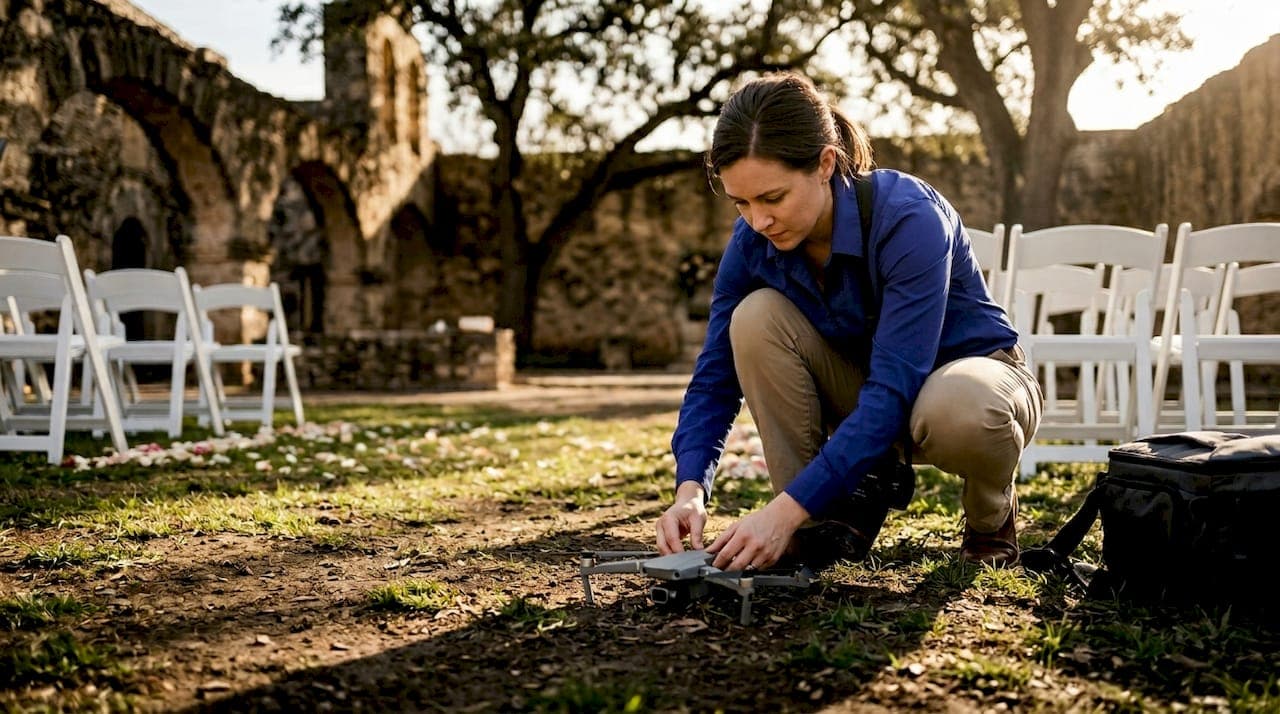
Most wedding albums look the same: a first kiss at the altar, a cake cutting, a few candid laughs on the dance floor. Beautiful, yes. But unforgettable? That takes something more. Drone photography gives your wedding a cinematic scale that no ground-based camera can match, turning your venue into a sweeping landscape and your guests into a living portrait. Yet most couples planning their San Antonio weddings never seriously consider it, either assuming it's too expensive, too complicated, or just a gimmick. This guide changes that.
Table of Contents
- Why choose drone photography for your wedding
- Understanding drone laws and permissions in San Antonio
- Where drones shine—and where they don't
- Tips for booking and collaborating with your drone team
- What most couples miss about drone wedding photography
- Ready to transform your San Antonio wedding photos?
- Frequently asked questions
Key Takeaways
| Point | Details |
|---|---|
| Drone photography is trending | A growing number of couples in San Antonio include drones for stunning, cinematic wedding memories. |
| Legal rules matter | Working with a certified pro ensures drone use follows FAA and local venue regulations. |
| Plan shots intentionally | Best results come from coordinating with your photo team and knowing when drones work—or don’t. |
| Choose the right provider | Experience, permits, and communication are key to capturing safe, breathtaking aerial wedding photos. |
Why choose drone photography for your wedding
There's a reason more couples are asking about aerial shots when they sit down with their photographers. The view from above tells a story that no traditional camera angle can. When a drone rises above your outdoor ceremony at a Texas Hill Country ranch or a San Antonio mission courtyard, it captures the full scale of the moment: the rows of guests, the surrounding landscape, the architecture framing your love story. That kind of image doesn't just look impressive. It feels important.
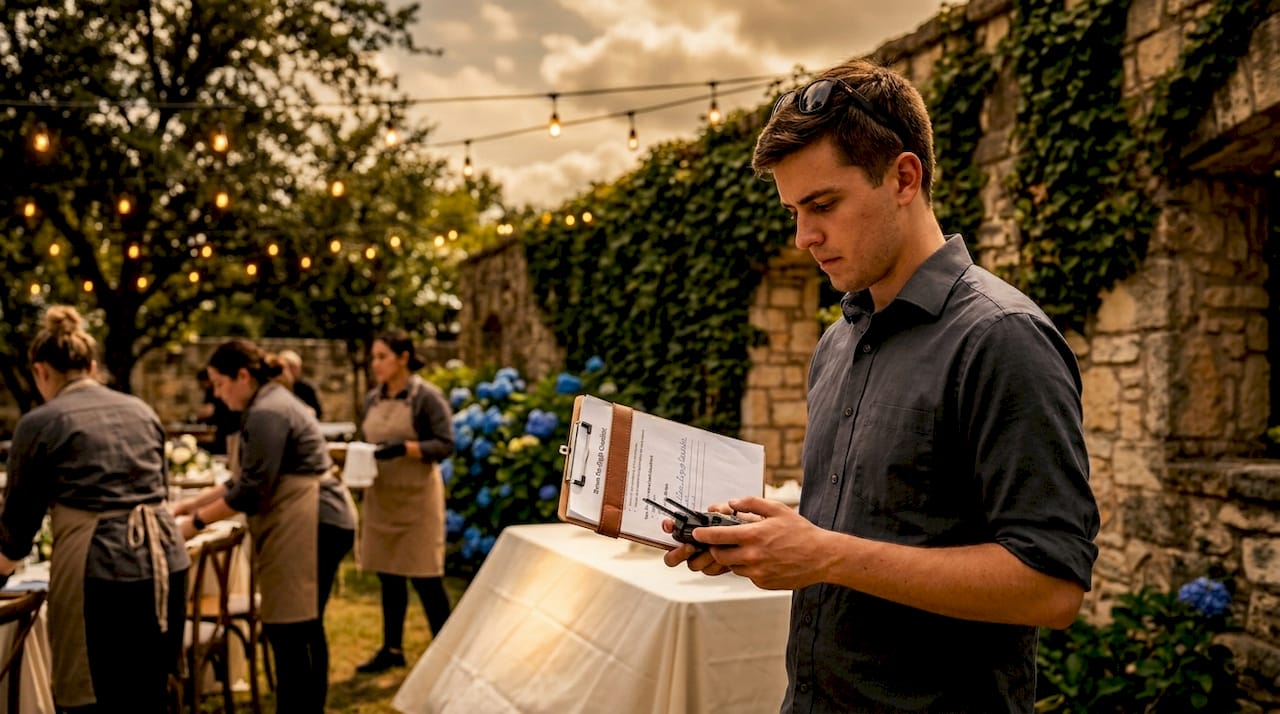
The wedding photography market is projected to grow from $26.1 billion in 2024 to $56.3 billion by 2034, driven by a compound annual growth rate of 8.0%. Within that growth, drone coverage is one of the fastest-rising style requests, with roughly 20% of couples now opting for aerial shots as part of their wedding package. That number has climbed steadily over the past few years, and it's easy to understand why.
Here's what drone photography actually adds to your wedding album:
- Aerial ceremony overviews that show the full layout of your venue, your guests, and your surroundings in a single breathtaking frame
- Grand exit shots from above, capturing confetti, sparklers, or flower petals raining down as you walk through a crowd of cheering family and friends
- Large group portraits where a drone can position itself directly overhead, creating a perfectly symmetrical bird's-eye image that's impossible from the ground
- Venue context shots that show how your reception space, garden, or outdoor setting looks in relation to the surrounding landscape
- Cinematic video clips for wedding highlight reels, giving videographers smooth, sweeping footage that adds a film-quality feel
San Antonio has no shortage of drone-friendly settings. Think of the sprawling grounds at venues like Kendall Plantation in Boerne, the open fields at The Milestone in New Braunfels, or the dramatic skyline views available from rooftop venues near the River Walk. Each of these settings becomes exponentially more stunning when photographed from 150 feet in the air.
Staying current on wedding photography trends shows that aerial imagery is no longer a luxury add-on. It's becoming a standard expectation for couples who want their wedding album to feel truly cinematic. If you're exploring all your wedding photography options, drone coverage deserves a serious spot on your shortlist.
"The aerial shot of our ceremony was the one photo that made every single person who saw our album stop and say, 'Wow.' It showed everything: our guests, the oak trees, the hill behind the venue. No other photo did that." — A real sentiment shared by couples who've experienced drone coverage firsthand.
Now that you know drone wedding shots offer unforgettable views, let's address the essential rules and logistics for using drones at San Antonio venues.
Understanding drone laws and permissions in San Antonio
Here's where many couples and even some photographers get tripped up. Flying a drone at a wedding isn't as simple as unboxing a consumer quadcopter and hitting record. Commercial drone use, which is exactly what wedding photography qualifies as, comes with real legal requirements in Texas and at the federal level.
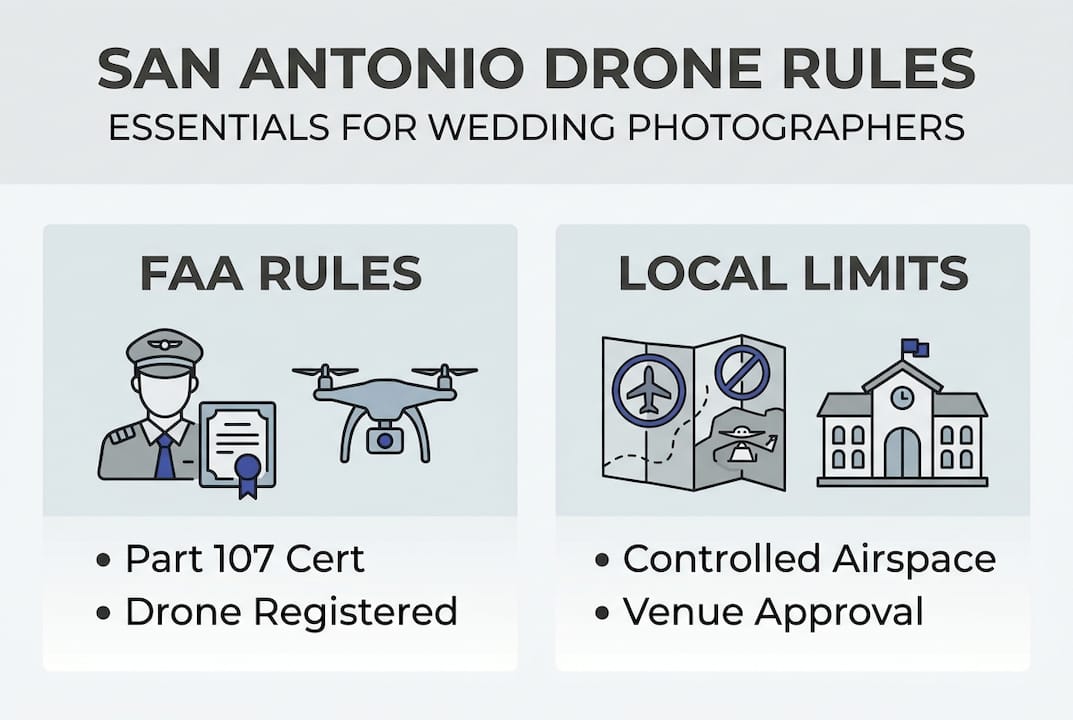
Under FAA Part 107, any drone operator being paid to fly (including wedding photographers) must hold a Remote Pilot Certificate. Drones weighing more than 250 grams must be registered with the FAA. Operators must keep the drone within visual line of sight, fly below 400 feet above ground level, and avoid flying over people who are not directly involved in the operation.
San Antonio adds another layer of complexity. The city sits near several controlled airspace zones, including San Antonio International Airport and two major military installations: Lackland Air Force Base and Randolph Air Force Base. Flying near these areas without authorization through the FAA's LAANC system (Low Altitude Authorization and Notification Capability) is illegal and can result in serious fines. Many popular wedding venues fall within or near these restricted zones, so checking airspace before booking is essential.
| Requirement | Details |
|---|---|
| FAA Part 107 certification | Required for all commercial drone operators |
| Drone registration | Mandatory for drones over 250 grams |
| Maximum altitude | 400 feet above ground level |
| Airspace authorization | LAANC required near SAT airport and military bases |
| No-fly zones | Jails, stadiums, most state parks, restricted airspace |
| Venue/HOA permission | Written approval required at most private venues |
Here's a simple checklist to use when planning drone coverage for your wedding:
- Confirm your photographer holds a valid FAA Part 107 Remote Pilot Certificate
- Ask whether your venue has a drone policy and request written permission
- Check if your venue falls within controlled airspace using a tool like AirMap or the FAA's B4UFLY app
- Verify that your photographer will apply for LAANC authorization if needed
- Ask about backup plans if airspace authorization is delayed or denied
- Confirm your photographer carries liability insurance that covers drone operations
Pro Tip: Ask to see your photographer's Part 107 certificate before signing any contract. A reputable drone wedding coverage provider will have this documentation ready and will handle all airspace authorizations on your behalf. If a photographer hesitates or can't produce credentials, that's a red flag.
Keeping up with wedding trends for 2026 means understanding that legal compliance isn't just a formality. It protects your wedding day from unexpected interruptions and protects you from liability if something goes wrong. With the legal side clarified, it's equally important to understand when and where drone shots work best, or when they should be skipped entirely.
Where drones shine—and where they don't
Drone photography is genuinely magical in the right conditions. But it's not a universal solution for every moment of your wedding day. Knowing when to use it and when to put it away is what separates a thoughtful photography team from one that's just showing off equipment.
Where drones create their best work:
- Outdoor ceremonies with open sky and scenic surroundings
- Grand exits with large crowds and dramatic visual elements like sparklers or confetti
- Overhead group portraits on open lawns or patios
- Venue establishing shots during golden hour, when the light is warm and soft
- Sweeping video clips for highlight reels, especially over water, hills, or city skylines
Where drones should stay grounded:
- Indoor venues: the tight space creates noise problems and flight risks, and the imagery simply doesn't benefit from altitude
- Windy conditions above 15 mph, where drone stability becomes compromised and footage turns shaky
- Rain or heavy cloud cover that affects both equipment and image quality
- Restricted airspace near airports, stadiums, or military installations
- Intimate emotional moments like vows or first looks, where the drone's noise and presence can be a distraction
| Situation | Drone recommended? | Why |
|---|---|---|
| Outdoor ceremony, open sky | Yes | Captures full scale and setting |
| Indoor reception hall | No | Noise, space, and safety concerns |
| Grand exit with sparklers | Yes | Dramatic overhead perspective |
| Emotional vow exchange | No | Drone noise disrupts the moment |
| Large group portrait outdoors | Yes | Perfect symmetry from above |
| Windy hilltop venue | Use caution | Stability and safety risks |
| Venue overview at golden hour | Yes | Best lighting for aerial shots |
A dedicated drone pilot, separate from your main photographer, is the gold standard. When one person is managing ground-level shots and another is controlling the drone, neither has to split their attention. Drone-friendly wedding venues in the San Antonio area often have specific windows of time when drone flights are permitted, so having a pilot who can move quickly and efficiently is a real advantage.
Pro Tip: Always schedule a site walkthrough with your drone pilot before the wedding day. Walking the venue together lets you identify the best launch and landing spots, spot any obstacles like power lines or tree canopies, and plan your shot list so nothing is left to chance on the day itself.
Now that you know where and when drones create magic, let's get hands-on with tips for booking and communicating with your photo team.
Tips for booking and collaborating with your drone team
Hiring a drone operator is different from hiring a traditional photographer. The questions you ask, the timeline you plan, and the communication you establish before the wedding all play a bigger role in the final result than most couples realize.
Start with the right questions during your initial consultation:
- Are you FAA Part 107 certified, and can I see your certificate?
- Do you carry drone-specific liability insurance?
- Have you flown at my venue before, or will you do a site visit?
- How do you handle airspace authorization near controlled zones?
- What happens if weather prevents flying on the wedding day? Is there a refund or reschedule policy?
- Will you be operating the drone yourself, or will you bring a dedicated pilot?
- How many batteries do you carry, and what's your maximum flight time per session?
Once you've hired your team, timeline planning becomes critical. Dedicated pilot coordination means your drone operator needs to know exactly when each part of your day happens so they can position themselves and get FAA authorization windows aligned correctly. Build drone flight windows into your schedule explicitly, not as an afterthought.
A pre-event site walkthrough is non-negotiable for complex venues. During the walkthrough, your pilot should identify takeoff and landing zones that keep the drone at least 100 feet from guests and 50 feet from structures. They should also note any obstacles, test the airspace authorization, and build a shot list with you based on what's actually achievable at that location.
"The couples who get the most out of drone coverage are the ones who treat it like a planned shoot, not an afterthought. When we know exactly what you want and when you want it, we can deliver images that genuinely surprise you." — A perspective shared by experienced aerial wedding photographers.
Communication is everything. Share your full wedding day timeline with your drone team at least two weeks before the event. Confirm the shot list, discuss backup plans for weather, and make sure your venue coordinator knows a drone will be operating so there are no surprises. You can explore how professional drone teams approach this kind of coordination, and reading through wedding client testimonials gives you a real sense of how planning translates into results.
As you prepare to select your photography team, there's one more layer worth considering: the bigger picture of how drone photos add lasting, meaningful value to your wedding story.
What most couples miss about drone wedding photography
Here's the honest truth that most articles won't tell you: adding a drone to your wedding doesn't automatically make your photos better. We've seen couples spend money on aerial coverage and end up with a handful of generic overhead shots that feel disconnected from the rest of their album. The technology isn't the magic. The intention behind it is.
The couples who walk away with truly stunning drone imagery are the ones who thought about why they wanted it, not just that they wanted it. They chose drone shots for specific moments that genuinely benefited from height and scale. They worked with their team to make sure those shots told a part of their story that ground-level photos couldn't.
Drone photography earns its place in a wedding album when it adds context and narrative. An aerial shot of your ceremony shows the community of people who showed up for you. A sweeping exit shot captures the energy and joy of that moment in a way that feels cinematic. But a drone hovering over your first dance in an open field? That might just be noise.
Our approach at our drone wedding approach is always story-first. We ask couples what they want people to feel when they look at their photos, and then we figure out whether and how drone coverage supports that feeling. Sometimes the answer is a single aerial shot that anchors the entire album. Sometimes it's a 10-second video clip that becomes the opening frame of a highlight reel. And sometimes, the right call is to keep the drone grounded and let the intimacy of the moment speak for itself.
Ready to transform your San Antonio wedding photos?
Your wedding deserves more than beautiful. It deserves unforgettable. At Larson Pro Photography, we combine artistic vision with technical expertise to create aerial wedding images that feel intentional, cinematic, and deeply personal.
Whether you're just starting to explore your options or you're ready to book, we'd love to show you what's possible. Browse our wedding drone packages to see how aerial coverage fits into a full photography experience, and visit our client portfolio to see real San Antonio weddings brought to life from above. Let's build something that stops people mid-scroll and makes them feel exactly what you felt on your wedding day.
Frequently asked questions
Is drone photography allowed at all San Antonio wedding venues?
Not all venues permit drone use due to airspace restrictions or HOA rules, so always check with your venue coordinator in advance and get permission in writing before your wedding day.
Do I need to get any permits for wedding drone photography?
Your professional photographer must hold FAA Part 107 certification and register their drone, and may also need city or HOA permits depending on your venue's location and local regulations.
When should drone photos be avoided at a wedding?
Drones should not be flown indoors, in bad weather, or near restricted airspace such as airports or stadiums, as these conditions create safety risks and legal issues.
How much does drone wedding photography usually add to the total cost?
Drone coverage typically adds a premium to your photography package because of specialized equipment, FAA licensing requirements, and the need for a dedicated pilot, but exact pricing varies by team and the scope of coverage you choose.