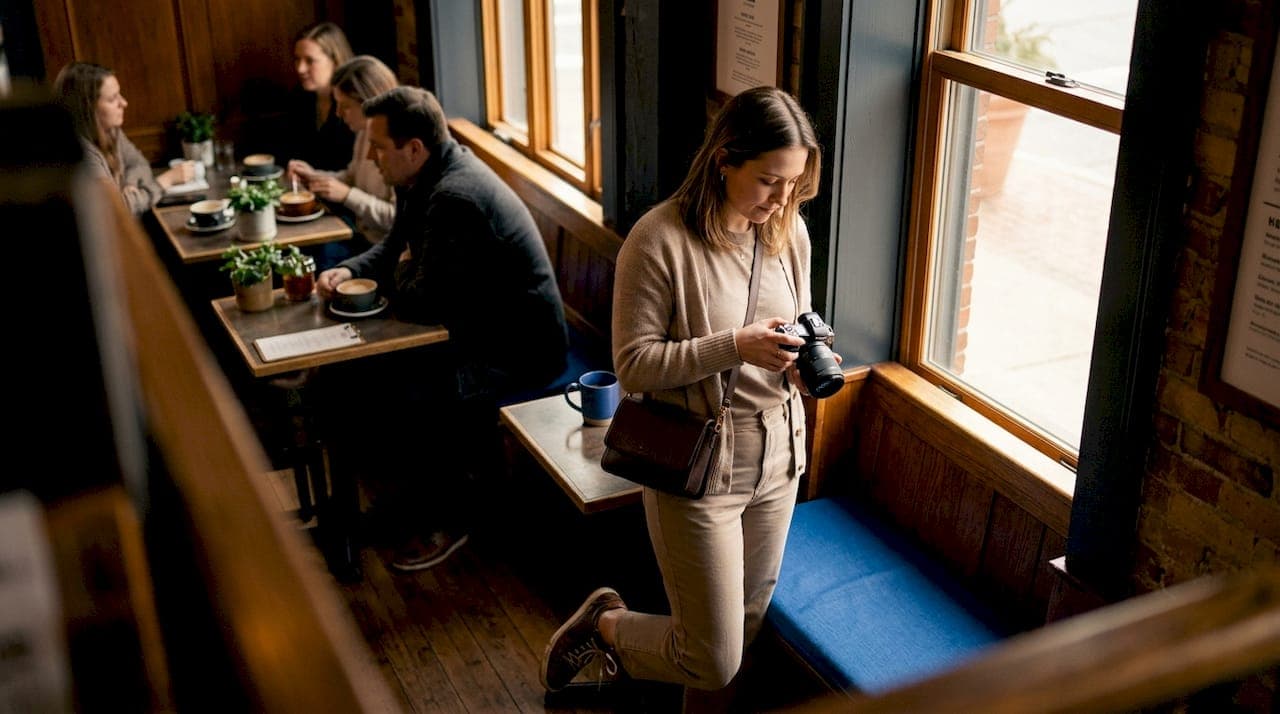
Capturing a real laugh, a stolen glance, or a tear rolling down someone's cheek — these are the moments that outlast any posed portrait. Mastering the candid photography essentials means learning to disappear into a scene while staying technically ready to fire the shutter at exactly the right second. It sounds simple. In practice, it demands the right gear, precise settings, sharp instincts, and a clear ethical compass. This guide walks you through every piece of that puzzle, from the best candid photography gear to the mindset shifts that separate forgettable snapshots from genuinely moving images.
Table of Contents
- Key takeaways
- 1. Candid photography essentials start with the right camera
- 2. Lens selection makes or breaks your candid shots
- 3. Essential equipment for candid photography beyond the camera body
- 4. Camera settings that work for candid shooting
- 5. Techniques for staying invisible while shooting
- 6. Ethical considerations every candid photographer must understand
- 7. Matching gear and techniques to your candid photography scenario
- My honest take on mastering candid photography
- See candid photography in action with Larsonprophotography
- FAQ
Key takeaways
| Point | Details |
|---|---|
| Choose discreet gear | Small, quiet cameras with prime lenses keep you invisible and keep subjects relaxed. |
| Master your settings | Aperture Priority at f/8 with Auto ISO and a fast minimum shutter speed gives you consistent, sharp exposures. |
| Decide ethics in advance | Pre-planning your boundaries reduces in-the-moment hesitation and leads to more authentic results. |
| Match gear to the scenario | Street work favors compact primes; wedding events call for telephoto zooms to shoot from a distance. |
| Attention management is the real skill | Technical readiness matters, but staying unnoticed is what actually preserves the candid moment. |
1. Candid photography essentials start with the right camera
The single biggest mistake beginners make is grabbing their largest, most conspicuous camera body. Size signals intent. When people see a professional-grade DSLR with a massive grip, they immediately change their behavior. Your first candid photography essential is a camera that does not announce itself.
Mirrorless cameras have largely replaced DSLRs for this purpose. They are quieter, lighter, and more compact. Many offer a fully silent electronic shutter, which is a genuine advantage in quiet settings like ceremonies or intimate dinners. Compact mirrorless systems like the Fujifilm X series or Sony's ZV line blend into almost any environment.
Smartphones are excellent for zero-attention candid street photography. Nobody looks twice when you raise a phone. That said, a dedicated camera gives you superior control over depth of field, low-light performance, and lens choice. For most photography enthusiasts who want to grow their skills, a mirrorless body with a 28mm or 50mm prime is the sweet spot.
Pro Tip: Switch your camera's shutter sound to silent or low-volume mode before you walk into any candid shooting situation. The audible click is often what breaks the spell.
2. Lens selection makes or breaks your candid shots
Lenses shape not just your focal length but your relationship with your subject. Choosing 28mm or 35mm primes for street candid work encourages closer engagement and produces more honest, contextualized images. You are part of the scene, not a distant observer.
For events like weddings or parties, a telephoto zoom changes the equation entirely. A long focal length like 70-200mm lets you shoot from across the room without anyone realizing you are photographing them. The couple's reaction during the first dance, a grandmother wiping her eye during the vows. These happen fast, and distance preserves them.
Here is a practical lens shortlist for candid photography for beginners:
- 28mm prime: Ideal for street and travel. Gets you close to the action with natural perspective.
- 35mm prime: The most versatile candid lens. Wide enough for context, tight enough for faces.
- 50mm prime: Great for portraits at events without feeling intrusive.
- 70-200mm zoom: The go-to for weddings, concerts, and any scenario where physical closeness is awkward.
Avoid wide zooms that start at 18mm for candid work. The distortion at the wide end looks unnatural, and the sheer size of these lenses draws attention.
3. Essential equipment for candid photography beyond the camera body
Good essential equipment for candid photography extends well past the camera and lens. Here is what actually matters when you are out in the field for hours.
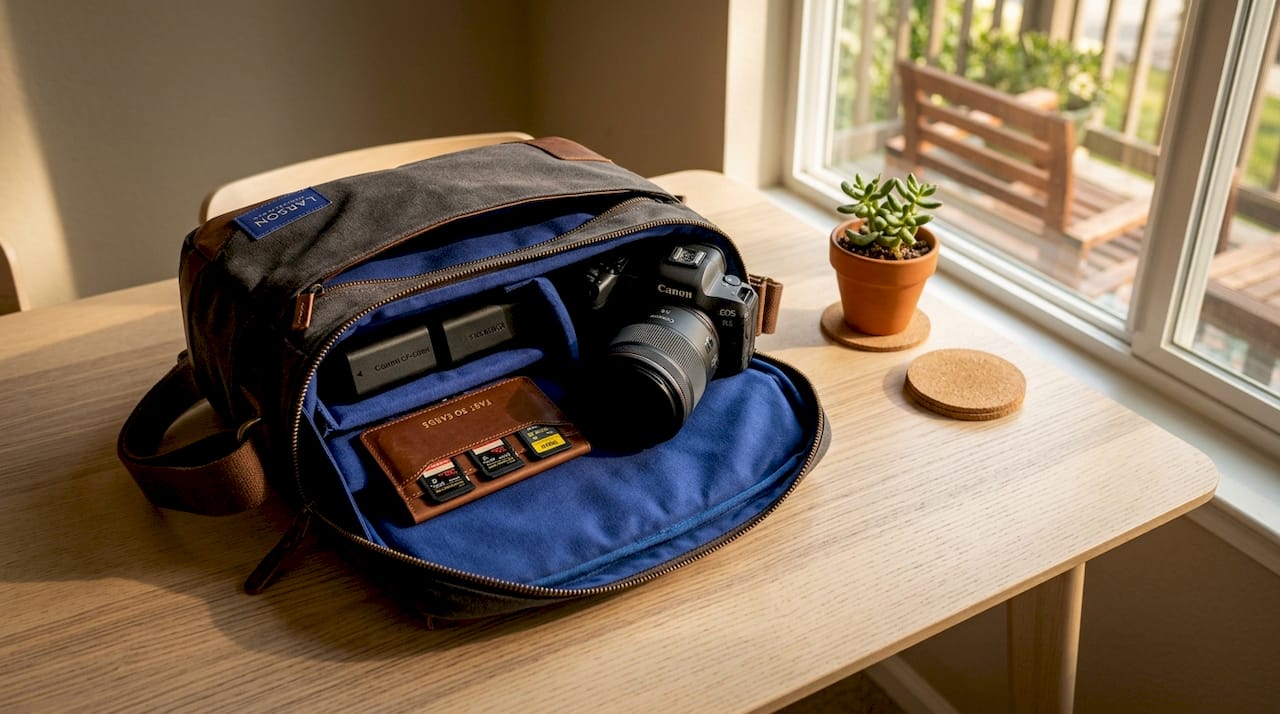
Batteries. Carry at least two fully charged batteries. Mirrorless cameras drain faster than DSLRs, and there is nothing worse than a flat battery during a wedding reception's peak moments.
Memory cards. Use fast, reliable cards with enough capacity that you never have to pause to manage storage mid-shoot. Shooting burst mode at 3 to 5 fps fills cards quickly.
Camera bag. Choose a bag designed for mobility. Sling bags and compact shoulder bags let you access your camera in seconds. A bulky rolling case signals professional setup and slows you down.
Avoid tripods. Shooting handheld prevents you from being marked as a formal photographer and keeps you reactive. Tripods lock you in place and make you the most obvious person in any room.
Flash is in a category of its own. Flash kills the candid effect by instantly making subjects self-conscious. Instead, push your ISO higher, open your aperture wider, or slow your shutter slightly when light is low. Natural light candid images consistently feel more genuine.
4. Camera settings that work for candid shooting
Getting the settings right before you ever raise the camera is one of the most underrated candid photo techniques. You will not have time to adjust exposure manually when a toddler suddenly runs into a perfect shaft of light.
Here is the setup that works consistently:
- Mode: Aperture Priority. Aperture Priority with exposure compensation gives you creative control while the camera handles the overall exposure. You define the depth of field; the camera adapts to changing light.
- Aperture: f/8. This is your workhorse setting. Aperture Priority at f/8 delivers strong depth of field so more of your scene is sharp, even if your focus is slightly off.
- Minimum shutter speed: 1/250s. Set this as your floor. Increase to 1/500s or faster if subjects are moving quickly.
- Auto ISO range: 100 to 3200. This lets the camera compensate for shifting light without blowing out highlights or going too grainy.
- Autofocus: Continuous AF with burst mode. Continuous burst at 3 to 5 fps with continuous autofocus reduces lag and captures micro-expressions you would otherwise miss.
- Zone focusing. Zone focusing at f/8 with a manually set focus distance lets you shoot instantly without waiting for the autofocus to hunt. Pre-set your focus to roughly 2 to 3 meters for street shooting.
Pro Tip: Program these settings as a custom mode on your camera so you can switch to "candid mode" instantly with a single dial turn. Every second spent adjusting settings is a moment you are not capturing.
5. Techniques for staying invisible while shooting
Your camera settings can be perfect and your gear flawless, yet if every person in the room is watching you, you will not get a single genuine expression. Managing attention is the most important candid photography skill you will ever develop.
Wear neutral clothing. Bright colors and graphic tees draw eyes. Blend into the environment. At a wedding, dress like a well-dressed guest. On the street, dress like everyone else.
Shoot from the periphery rather than the center of the action. People at the edges of events are rarely noticed. Position yourself where you have a sightline into the interesting activity without being in the middle of it.
Shoot from the hip occasionally. Pre-focus to a moderate distance, keep the camera low, and fire without bringing the viewfinder to your eye. You sacrifice some framing precision but gain complete invisibility. This technique works especially well in busy street settings.
Learn to anticipate rather than react. Watch body language, group dynamics, and emotional arcs. The moment before the hug is often more compelling than the hug itself. If you are already focused and framed on a couple laughing, you will capture the peak expression rather than arriving late.
6. Ethical considerations every candid photographer must understand
Ethics in candid photography is not a checkbox. It is an ongoing practice that shapes both your images and your character as a photographer.
The core principles worth understanding:
- Pre-plan your boundaries. Pre-deciding your ethical limits before you walk into a situation removes in-the-moment uncertainty and leads to more consistent, respectful practice.
- Respect private spaces. Photographing people through windows, in restrooms, or in clearly private situations is never acceptable regardless of legality.
- Avoid vulnerable subjects. Children, people in distress, and individuals in sensitive situations deserve extra protection. When in doubt, do not shoot.
- Respond gracefully to objections. If someone notices you and is uncomfortable, acknowledge it, apologize, and offer to delete the image. Arguing is never worth it.
The question of permission deserves its own thought. Permission changes the photograph, not just the ethics. The moment you ask, subjects perform. They straighten up, smile on command, or become self-conscious. A permission-based image is technically posed, regardless of how natural it looks. This does not make permission-based work lesser art. It makes it different art.
"The choice to ask permission or not is a creative decision that fundamentally alters the kind of truth you are able to capture." — Eyeshot Street Photography
For a deeper look at how these choices play out in real wedding settings, the discussion on candid vs posed wedding photos at Larsonprophotography is worth reading carefully.
7. Matching gear and techniques to your candid photography scenario
Not every candid situation calls for the same approach. Here is how the gear and techniques shift depending on your context.
| Scenario | Best lens choice | Camera setting focus | Key technique |
|---|---|---|---|
| Street photography | 28mm or 35mm prime | f/8, zone focus, Auto ISO | Shoot from the hip; blend in |
| Wedding ceremony | 70-200mm zoom | Continuous AF, 1/500s min | Shoot from the periphery, silent shutter |
| Wedding reception | 50mm prime or 35mm | f/2.8 to f/4, higher ISO | Stay mobile, anticipate moments |
| Travel portraits | 35mm or 50mm prime | Aperture Priority, Auto ISO | Engage subjects subtly before shooting |
| Engagement sessions | 50mm to 85mm prime | f/2 to f/2.8 for subject isolation | Direct loosely; let natural interaction happen |
Smartphones deserve an honest mention here. For casual street shooting where total invisibility matters more than image quality, a phone is genuinely the better tool. You can shoot from waist height, in portrait orientation, with zero social friction. For professional events and any situation where you need to print large or edit extensively, a dedicated mirrorless body with a quality prime will consistently deliver superior results. The natural wedding photos guide at Larsonprophotography expands on this for event-specific contexts.
My honest take on mastering candid photography
I have watched photographers obsess over gear for years while completely neglecting the one skill that actually produces great candid images: the ability to manage where people's attention goes.
In my experience, the photographers who consistently capture genuine moments are not necessarily the ones with the best cameras. They are the ones who know how to become invisible, how to read a room, and how to be patient. I have seen someone capture a stunning wedding candid on a Fujifilm X-T5 while the photographer next to them with a $6,000 body completely missed the moment because they were fussing with settings.
The ethical dimension matters more than most photographers admit. I have found that pre-deciding what I will and will not photograph actually frees me creatively. When the boundaries are clear, I stop second-guessing and start seeing. The images that come from that mental state are almost always better.
My practical advice: shoot a lot, review critically, and pay more attention to the emotional content of your images than their technical perfection. A slightly soft photo of a real tear beats a razor-sharp photo of a posed smile every time. Build your candid instincts deliberately, and the technical pieces will follow.
— Todd
See candid photography in action with Larsonprophotography
If you want to see what these principles look like applied at the highest level, Larsonprophotography's work across San Antonio weddings and engagement sessions offers a genuine education in authentic moment capture.
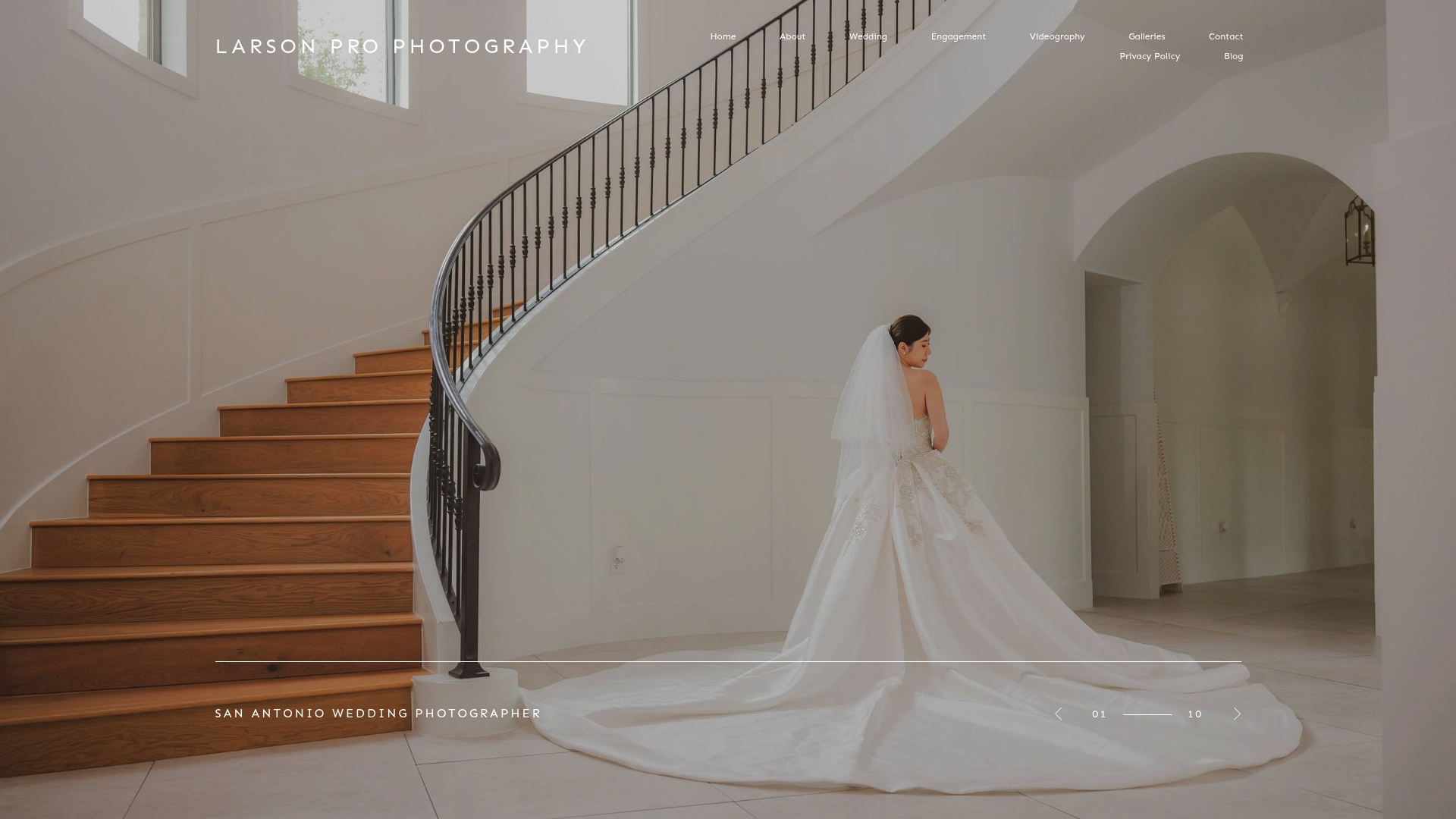
Every image in the wedding photography portfolio reflects the same approach outlined in this article: discreet gear, deliberate settings, ethical instincts, and the patience to wait for real emotion. The engagement session gallery shows how candid techniques translate to smaller, more intimate shoots where genuine connection between subjects is everything. If you are ready to experience candid photography as a client or simply want to study work at this level, the client portfolio is the best place to start.
FAQ
What is the best camera setting for candid photography?
Aperture Priority mode at f/8 with a minimum shutter speed of 1/250s and Auto ISO between 100 and 3200 is the most reliable setup for candid shooting. This combination keeps most scenes sharp while adapting automatically to changing light.
Do I need a special lens for candid shots?
Not necessarily. A 35mm or 50mm prime lens works for most candid situations, covering street photography, events, and portrait work. For weddings where you need distance, a 70-200mm zoom lets you capture moments without being noticed.
Is it legal to photograph strangers without permission?
In most public spaces in the United States, photographing people without explicit permission is legal. However, legal permission and ethical responsibility are separate things. Always avoid photographing people in private settings or situations where they have a reasonable expectation of privacy.
Does flash ruin candid photos?
Flash draws immediate attention and makes subjects self-conscious, which destroys the candid quality of an image. Push your ISO higher, open your aperture, or look for available light sources instead of reaching for a flash unit.
When should I ask permission before shooting?
Ask permission when you are in private settings, photographing children, or when a subject appears uncomfortable. Understand that once you ask, the resulting image is no longer truly candid since the subject's awareness changes their behavior.