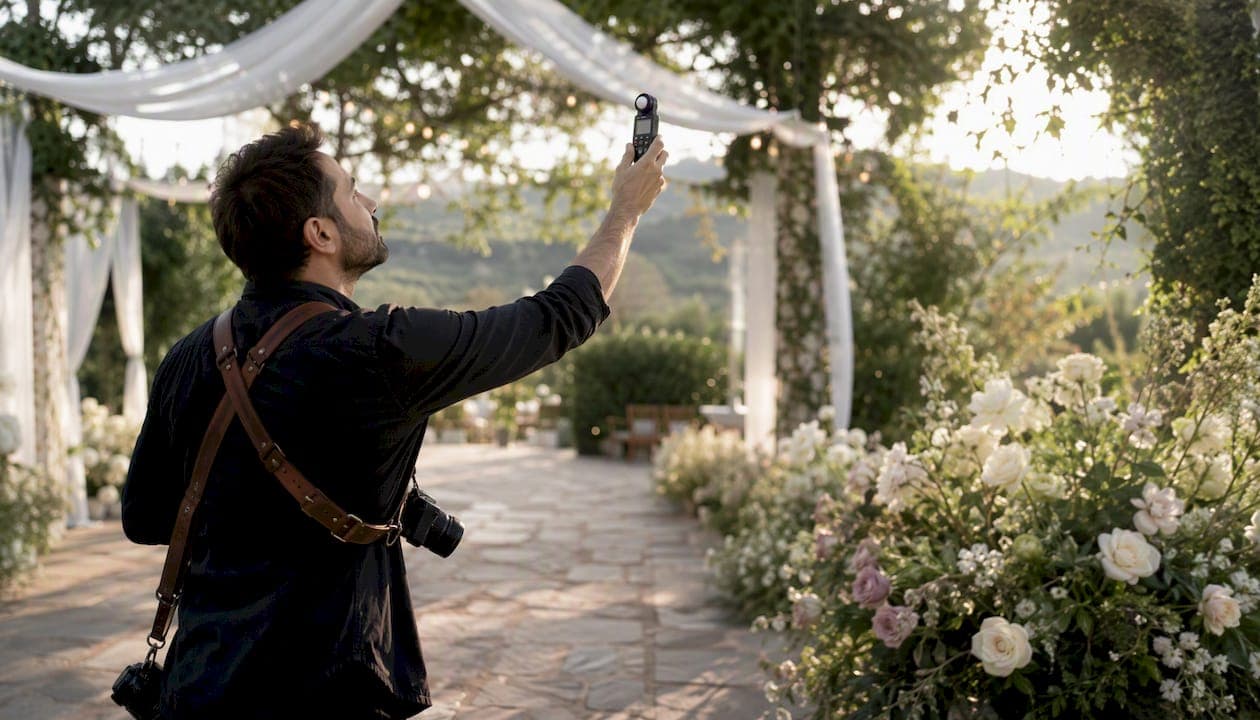
Location scouting is what turns a director's vision into a shoot you can actually pull off, insure, and finish on schedule. Skip it, and even a well-funded production can lose hours to a dead power outlet, a hostile property manager, or a permit nobody pulled. According to MovieMaker Magazine, poor location choices add measurable stress and cost to a shoot, while Stage 32 frames scouting as risk management, not an aesthetic afterthought.
Here's the verdict: if your project involves more than one location, a crew larger than two people, or any kind of paid client deliverable, scouting isn't optional. It's the line item that protects every other line item in your budget.
- Scouting confirms creative fit before you commit crew and gear
- It exposes legal and access problems while they're still cheap to fix
- It gives every department (sound, lighting, art) a shared reference before shoot day
Quick fact: A well-run recce removes uncertainty by translating what a scout sees into concrete schedule, crew, and power decisions, according to Fresh Locations.
Key Takeaways
Location scouting converts a creative idea into a shoot plan that is legally cleared, technically feasible, and financially predictable.
| Point | Details |
|---|---|
| Scout before you budget | Confirm access, power, and permits before locking a schedule or day rate. |
| Match the visit to shoot time | Light, noise, and traffic shift by the hour, so scout when you'll actually be filming. |
| Document for every department | Photos, a site plan, and contact windows let sound, lighting, and art teams decide without a second visit. |
| Plan legal paperwork early | Property releases, COIs, and permits take time and should never be a shoot-day scramble. |
| Work with a photographer who scouts | Larson Pro Photography builds location review into engagement and wedding planning to avoid day-of surprises. |
Table of Contents
- What Is Location Scouting, Exactly?
- Why Scouting Matters for Story, Budget, and Safety
- What Should You Check During a Location Scout?
- How Does the Scouting Process Actually Work?
- Permits, Releases, and Insurance You Need to Confirm
- Planning Around Weather and Seasonal Risk
- When Should You Hire a Professional Scout?
- How Larson Pro Photography Supports Your Location Planning
- Frequently Asked Questions
- Sources
What Is Location Scouting, Exactly?
Location scouting is the pre-production process of finding, evaluating, and locking down a shoot site, including checking availability, securing permits, and confirming technical logistics like power and lighting, per Wikipedia's overview of the practice. It's not just browsing pretty backdrops online. It's verifying that a place can physically and legally host your production on the day you need it.
The work happens in stages: initial discovery (often digital), an in-person site assessment, then a technical recce where department heads confirm the space works for their specific needs. Deliverables include photos, a rough site plan, and a contact sheet for whoever controls access.
Who runs this depends on project size:
- Location scout: does initial legwork and shortlisting on larger productions
- Location manager: owns permissions, contracts, and on-set logistics
- Producer: often scouts personally on smaller shoots or weddings
- DP or lead photographer: should walk the final shortlist before anything is locked
Why Scouting Matters for Story, Budget, and Safety
A location does more than sit in the background. It sets tone, era, and mood, and it shapes how your subjects move and how your camera can move around them. A cramped rooftop with the wrong light kills a scene that reads beautifully on paper. Scouting is where you catch that mismatch before call time.

The practical side matters just as much. Power access, load-in routes, parking, sightlines, and ambient noise determine whether your plan is realistic or wishful thinking. Film & Pen notes that digital location databases and tools like drones speed up initial discovery, but in-person technical validation for sound and power remains essential no matter how good the photos look online.
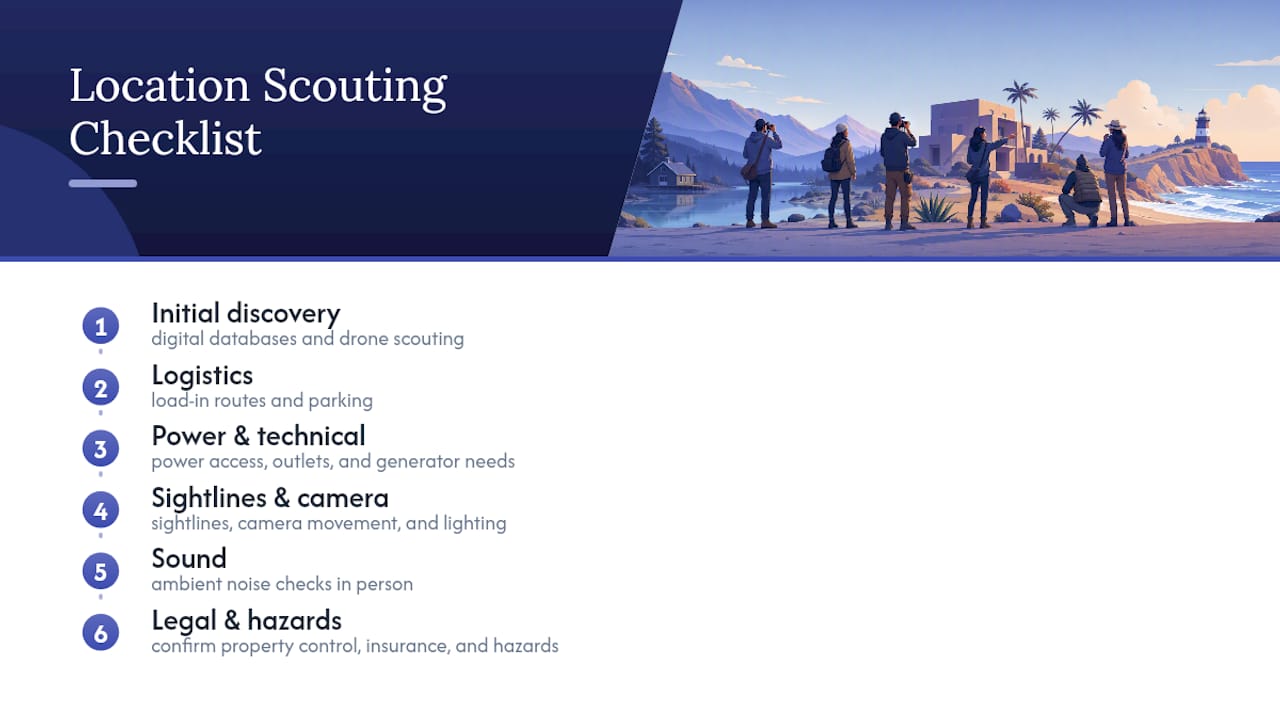
Money is where scouting earns its keep. Indie productions especially can watch a budget evaporate to hidden location fees and logistics surprises that a dedicated scout or location manager would have caught early, according to Film & Pen's analysis of production success factors. A generator rental you didn't budget for, or three hours lost negotiating parking with a building super, costs real money on a day rate crew.
Safety and legal exposure round out the case. Scouting confirms who actually controls the property, what insurance they require, and whether the site has hazards (unstable flooring, live traffic, restricted airspace for drones) that need mitigation before anyone shows up with gear.
Pro Tip: Always ask a property contact whether anyone else has permission to use the space that day. Shared-access surprises, like a maintenance crew or another tenant, are one of the most common and most preventable scouting failures.
As one industry insight puts it, treating scouting as proactive risk management rather than a creative checkbox is what secures early budget approval from producers, per Stage 32.
What Should You Check During a Location Scout?
A scout visit isn't a walk-through with a camera phone. It's a structured audit, and skipping items on it is how shoot days fall apart. Prioritize these in order:
- Access: Can trucks or vehicles reach the entrance? Are there stairs, elevators, or narrow doorways that limit gear?
- Power: How many outlets, what amperage, and where's the breaker box? Will you need a generator?
- Load-in and load-out: Is there a service entrance, or does everything go through the front door?
- Parking: For crew, talent, and equipment trucks, not just guests
- Crew base: A spot for staging gear, catering, and breaks, since a beautiful site with no staging area quickly becomes an operational headache
- Noise: HVAC hum, nearby traffic, construction schedules, flight paths
- Sightlines: What's in frame that you don't want, and what can you control with blocking or lensing?
- Permitting status: Does this location require a city or county permit, and has anyone applied?
- Fragile surfaces: Marble floors, antique furniture, delicate landscaping that limits where gear can sit
- Accessibility: Wheelchair access for talent or crew members who need it
- Nearby amenities: Restrooms, food options, and a backup indoor space within a short drive
Document everything. Photos should cover wide establishing shots of the space, tight shots of outlets and problem areas, and reference shots from your planned camera angles. Annotate a rough site diagram with where power, entrances, and staging areas sit, and log every contact name, phone number, and access window in one shared document. Sound, lighting, and art departments should be able to make decisions from your notes without a second site visit.
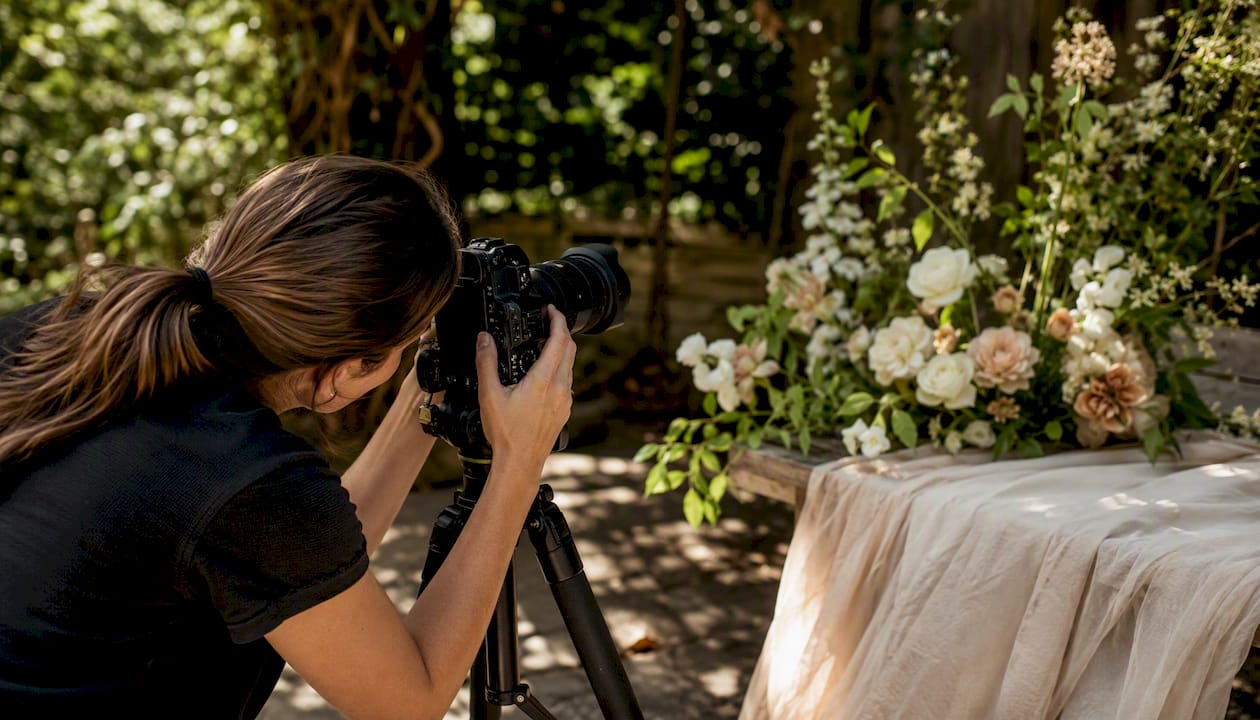
Pro Tip: Photograph and, if possible, film a short test clip at the exact time of day you plan to shoot. Sunlight angle, shadow direction, and ambient noise all shift by the hour, and a location that looks perfect at 10 a.m. can be unusable at 4 p.m. This single habit, confirmed as non-negotiable even with today's digital scouting tools, is what separates a smooth shoot day from a scramble, according to MovieMaker Magazine.
How Does the Scouting Process Actually Work?
Scouting follows a predictable sequence, though the depth changes with project size.
- Brief interpretation: The director or client explains the creative and narrative goals for each scene or shoot.
- Desk research: Digital databases, location agencies, and past client photos narrow down candidates before anyone drives anywhere.
- Initial location visits: A scout or producer walks the shortlist, taking photos and notes on general fit.
- Shortlisting: Two or three finalists get presented to the director or DP for creative sign-off.
- Tech recce: Department heads (sound, gaffer, art director) walk the top choice together to confirm technical feasibility.
- Negotiation and clearance: Fees, permits, and property releases get finalized.
- Booking and lockdown: The location is confirmed in writing, and the shoot schedule is built around its access windows.
Timelines vary widely. A short commercial might compress this into a single week. An indie feature often needs four to six weeks to scout, negotiate, and lock multiple locations. A wedding or engagement shoot usually needs just one focused scouting visit, sometimes combined with the couple's own suggestions, a week or two before the date.
Decision points matter as much as the steps themselves. If a location fails on power or access and mitigation (a generator, a soundproofing blanket, an alternate load-in route) costs more than switching sites, move to your backup. Every stage should produce something concrete: photographs, a rough shot list matched to the space, a site plan, and any certificate of insurance requests sent to property owners.
Permits, Releases, and Insurance You Need to Confirm
Every location comes with paperwork, and skipping it is how productions get shut down mid-shoot. The standard documents include:
- Property release: Written permission from the owner or authorized representative to shoot on-site
- Certificate of insurance (COI): Proof of liability coverage, often required by property managers, venues, and city film offices before they'll grant access
- City or county film permit: Required for public property, street closures, or anywhere with foot traffic you might disrupt
- Resident notification letters: Common in residential neighborhoods where filming activity needs advance notice to neighbors
Budgets should account for the location fee itself, permit application fees, and any parking or traffic control costs a municipality requires for street shoots. These add up fast on multi-day productions.
Watch for red flags that need escalation before you commit: restricted access windows, heritage or landmark status that limits what you can alter or attach to a structure, and use limitations buried in a property's own insurance policy. In the United States, municipal rules vary significantly by city, so checking your local film office's guidance before finalizing a schedule saves you from a permit surprise on shoot day.
Planning Around Weather and Seasonal Risk
Weather doesn't just threaten outdoor shoots. It threatens your entire schedule if you haven't planned for it. Scout for time-of-day light, seasonal foliage changes, wind exposure, and flood risk at the specific location, and check sunrise and sunset angles against your planned camera positions.
Build contingencies before you need them:
- Weather holds with a clear rebooking window
- A backup interior location within short driving distance
- Flexible call sheets that can shift by a few hours without cascading delays
- Rental options on standby: tents, heaters, or portable generators
Pro Tip: Negotiate weather hold terms into your location agreement upfront, not after a storm forces a reschedule. Property owners are far more willing to waive or reduce cancellation fees when the terms are set before money changes hands, not during a panicked phone call the morning of.
When Should You Hire a Professional Scout?
Not every shoot needs a dedicated location scout. But certain signals mean you should stop treating it as a DIY task:
- Your budget supports more than a one-day shoot with multiple setups
- You need permits, insurance, or negotiation with a property manager or agent
- The production involves multiple locations that need to be scheduled around each other
- Your crew is large enough that overtime costs from a bad location choice would sting
The math tends to favor hiring help more often than people expect. A scout's fee is frequently offset by avoided overtime, a permit mistake caught early, or a location fee negotiated down from the first asking price, an outcome Film & Pen highlights as common on indie productions with thin margins. At Larson Pro Photography, treating scouting as foundational rather than optional has consistently meant a location becomes part of the story instead of a rushed backdrop, a distinction couples notice in their final gallery.
A Shoot Where Scouting Changed Everything
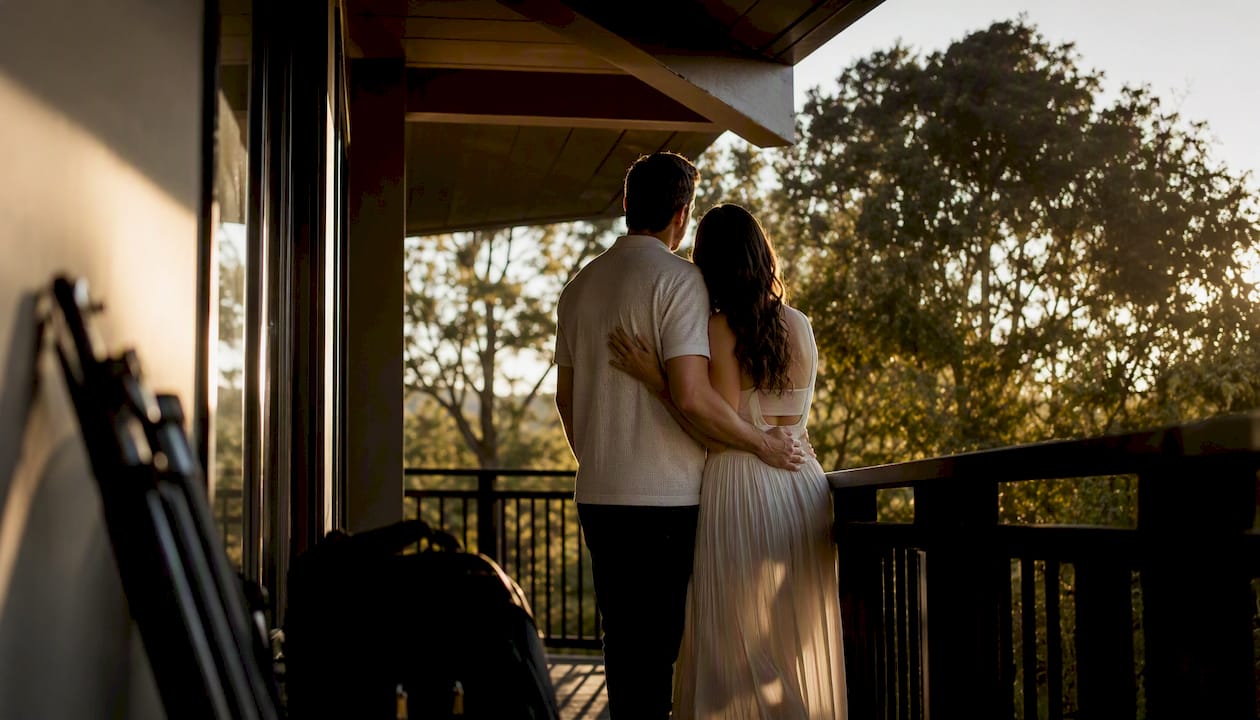
On one engagement session, a pre-visit to a downtown rooftop revealed the golden-hour light was blocked by a neighboring building nobody noticed in the listing photos. We shifted the shoot forty minutes earlier and moved the couple's final pose. The gallery only worked because the scout happened first.
How Larson Pro Photography Supports Your Location Planning
Choosing the right backdrop for your engagement or wedding photos shouldn't be guesswork, and it shouldn't fall entirely on you either. Larson Pro Photography works location advice directly into the planning process for every session, walking through light conditions, access, and timing before the actual shoot date so nothing gets discovered the hard way on camera day.
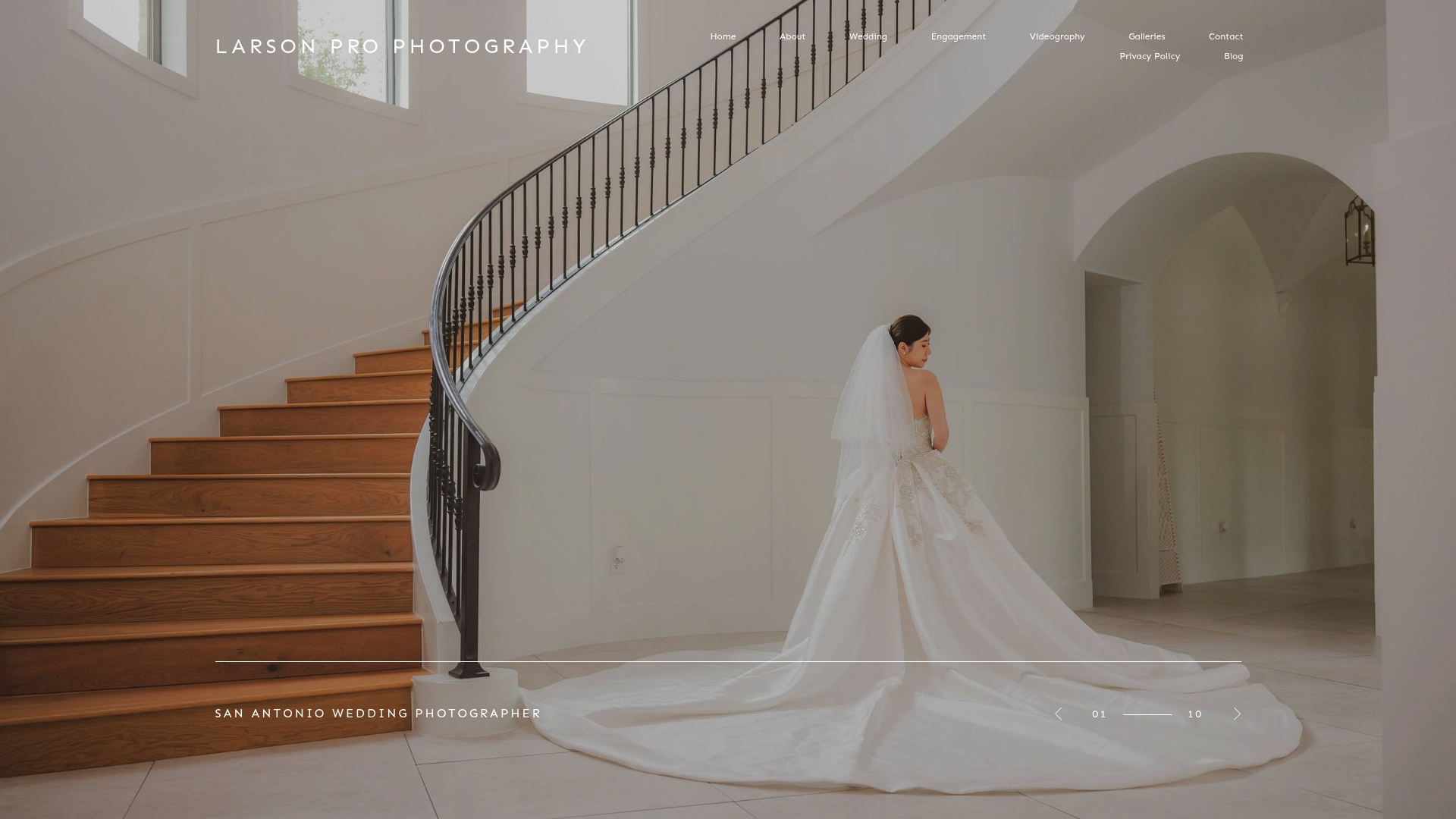
That means fewer surprises and more time spent on what actually matters: the two of you, in a setting that fits your story instead of just filling a frame. Whether you're weighing a downtown rooftop, a hill country ranch, or a quiet backyard, our team has already scouted San Antonio's best-known and lesser-known spots for light, access, and mood. If you're planning an engagement session and want a location that actually works for your timeline and your light, reach out through our engagement page or visit our clients page to start the conversation.
Frequently Asked Questions
What is the main importance of location scouting explained in simple terms? Location scouting confirms that a site works creatively, technically, and legally before you commit crew, gear, and budget to it. It's the step that prevents expensive surprises on shoot day.
How far in advance should scouting happen? For weddings and engagement sessions, one to two weeks ahead is usually enough. Larger productions with permits or multiple locations often need four to six weeks.
What's the difference between a scout and a tech recce? An initial scout evaluates general fit and creative potential. A tech recce brings in department heads to confirm technical details like power, sound, and load-in before the location is locked.
Do I need a permit for a small photography shoot? It depends on the location and municipality. Public parks, streets, and government-adjacent property often require a permit even for small crews, so checking your local film office is worth the ten minutes it takes.
Can I skip professional scouting for a small shoot? For a single-location, low-complexity session, a producer or photographer scouting personally is often enough. Once permits, multiple locations, or a larger crew enter the picture, professional scouting support tends to pay for itself.
Sources
For deeper detail on the mechanics and risk side of scouting, see MovieMaker Magazine's primer, Stage 32's breakdown of scouting as risk management, and Wikipedia's overview of standard scouting terminology. For creative location inspiration specific to couples' sessions, this guide on artistic wedding photography ideas is worth a read, alongside our own post on why location matters in your engagement photos.
- Making a Scene: A Primer to Location Scouting - MovieMaker Magazine
- The Undeniable Importance of Location Scouting! - Stage 32
- Location scouting - Wikipedia
- Why Is a Location Recce Important? A Production Team Guide - Fresh Locations
- What is film location scouting and why it matters - Film & Pen