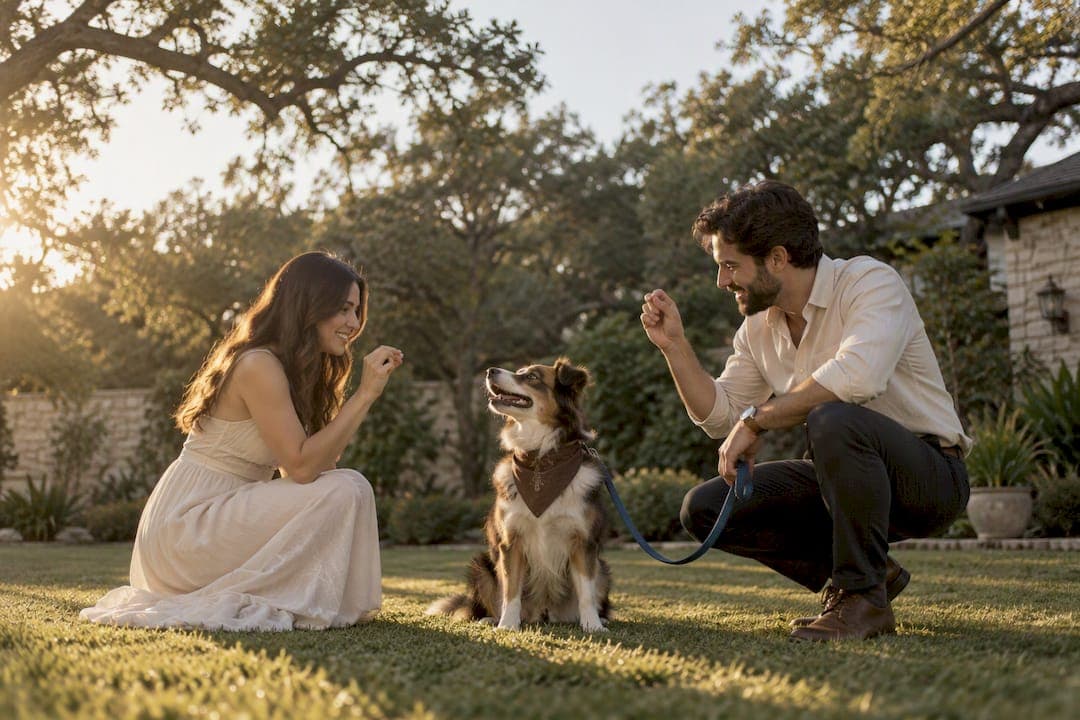
Bring your dog if they're calm around strangers, know basic commands, and the location allows pets on leash. Photographers like Larson Pro Photography work with dogs regularly, and public land often follows National Park Service leash rules that affect how the shoot runs. Confirm the site's pet policy first, then tell your photographer what to expect before the session.
TL;DR:
- A dog must be calm, well-trained, and healthy to handle a photoshoot, with reliable recall, sit or stay, and a loose leash.
- Confirm pet policies and leash restrictions at the venue beforehand, especially on public land following National Park Service rules.
- Prepare your dog over two to three weeks with practice, introduction to camera sounds, and a trial session at the same time of day as the shoot.
- Focus on simple prompts like walking together or heel to get natural-looking photos, avoiding sit poses that turn the dog's back to the camera.
- Keep the shoot brief and plan for contingency options like moving indoors if your dog shows signs of stress or fatigue.
Table of Contents
- Deciding whether to bring your dog: temperament and training checklist
- Location selection and legal or safety rules to check before booking
- Preparing your dog in the weeks before the shoot
- Posing prompts and photographer cues that work with dogs
- Props, wardrobe, and small styling details that photograph well
- Day-of logistics: handler, pacing, and contingency plans
- Safety, stress signals, and when to stop
- What to tell your photographer in advance
- A photographer's honest take on dog-inclusive sessions
- How Larson Pro Photography plans dog-inclusive engagement sessions
- Sources
- FAQ
Deciding whether to bring your dog: temperament and training checklist
A dog who greets strangers calmly and settles after a few minutes of excitement is a good candidate. A dog who lunges, barks at every jogger, or panics near traffic will spend the session stressed instead of photogenic, and that shows in every frame.
Before booking, confirm your dog can reliably do three things: come when called, hold a sit or stay for a few seconds, and walk beside you without pulling. These are not tricks, they are the tools your photographer will lean on between shots.
Health prep matters too. Update vaccines, treat for fleas and ticks, and schedule a bath or brushing a day or two before so your dog looks and feels their best on camera.
- Temperament: calm around new people and noise, not reactive or anxious in public
- Commands: reliable recall, sit or stay, and a loose-leash heel
- Health: current vaccines, flea and tick prevention, recent grooming
- Fit check: if two of the three are shaky, plan a shorter session or skip it this time
Location selection and legal or safety rules to check before booking
Call ahead or check the venue's website for a pet policy before you fall in love with a backdrop. Signage at the entrance often spells out restrictions that a quick online search misses, especially at botanical gardens, historic sites, and some private venues.
Public land adds another layer. Many locations follow National Park Service guidance that limits leashes to six feet and keeps pets out of certain trails, meadows, and developed areas, and ignoring that can mean a fine on top of a ruined shoot.
A leash capped at six feet changes your posing options: it rules out off-leash running shots but still works for walking, sitting, and close-up frames if your photographer plans around it.
- Confirm pet rules by phone or on the venue's official site, not just a search snippet
- Check for wildlife-sensitive zones or nesting areas that are off-limits to pets
- Ask about permit requirements if you plan a longer or larger session
- Schedule during quieter hours to reduce distractions from other visitors and dogs
Preparing your dog in the weeks before the shoot
Give yourself two to three weeks, not two days. Rushed prep is where trigger stacking creeps in, the phenomenon where several small stressors pile up until a normally easy dog starts reacting badly, according to AKC guidance on trigger stacking. Spacing out short sessions keeps stress from building.
- Practice heel, sit, and stay in five-minute sessions, a few times a week, in different settings.
- Introduce camera sounds and a stranger holding a camera near your dog so the shutter and movement feel routine.
- Run a trial mini-session at home or in your neighborhood with the outfit or accessories you plan to use.
- Watch how your dog handles the trial run and adjust: shorten future sessions if they seem tired or distracted quickly.
- Book a vet check if it has been a while, and confirm flea and tick prevention is current before the shoot date.
Pro Tip: Run your trial session at the same time of day as the real shoot so your dog's energy level matches what your photographer will actually see.
Posing prompts and photographer cues that work with dogs
Simple, repeatable prompts get the best results because they give your dog a job instead of asking them to sit still and look interested. A walk-together shot, where you stroll toward the camera with the leash relaxed, almost always reads naturally.
Positioning matters more than people expect. A dog cued into a heel beside you, facing the camera, photographs far better than one told to sit, since a sit often turns the dog's back to the lens, a point backed by heeling technique guidance. Ask your photographer to call your dog's name or make a quick sound from behind the camera to catch that alert, ears-up look right as the shutter fires.
- Walk-together frames with a relaxed leash and both of you looking forward
- Leash-over-shoulder poses that keep hands free for a hug or kiss
- A tuck-and-kiss shot with the dog sitting between you at knee height
- Ring-on-collar detail shots for a keepsake image separate from portraits
- Candid action shots of a favorite trick, a good shake, or a happy trot
Props, wardrobe, and small styling details that photograph well
Comfort beats cute every time. A simple bandana or a lightweight bow tie photographs well and takes seconds to put on, while stiff costumes or tight harnesses tend to make dogs fidget or scratch mid-shot.
Coordinate loosely with your outfits and the setting rather than matching exactly. A rust-colored bandana against a green park background reads better than an outfit that competes with your own colors.
- Choose comfort-first accessories: a soft bandana, a simple bow tie, nothing restrictive
- Match tones loosely to your outfits and the location instead of an exact match
- Pack treats, a collapsible water bowl, a towel, a lint roller, waste bags, and a spare leash
- Skip the accessory entirely if your dog paws at it or seems distracted by it
Day-of logistics: handler, pacing, and contingency plans
Assign one person, ideally someone your dog already trusts, to handle the leash, treats, and bathroom breaks so you and your partner can stay focused on the camera. A dedicated handler consistently improves how smoothly a shoot with a dog goes, per practical shoot advice from Dogster.
- Schedule the dog portion in a focused 15 to 30 minute window, ideally near the start when energy is highest.
- Build in a water and shade break halfway through, even on cool days.
- Bring a towel and a change of clothes for muddy paws or an enthusiastic greeting.
- Have a backup plan ready, such as moving indoors or shortening the session, if weather or overstimulation gets in the way.
Pro Tip: Pack the water bowl and treats in an outside pocket you can reach without digging through a bag, because a stressed dog won't wait patiently while you search.
Safety, stress signals, and when to stop
Watch for flattened ears, lip licking, yawning outside of tiredness, freezing in place, or a low growl. These are early signs of stress, and they show up before a dog reaches a breaking point, per AKC guidance on trigger stacking.
If you see two or more of these signs, pull your dog to a quiet spot, offer water or a favorite toy, and let them decompress for several minutes before deciding whether to continue. If the signs return quickly, switch to dog-free couple shots and save the pet photos for a calmer day, ideally somewhere familiar like your own yard, and respect leash limits on public land throughout.

What to tell your photographer in advance
Share the details that let your photographer plan shots instead of guessing on the spot. This conversation should happen days before the shoot, not in the parking lot.
- Your dog's temperament, known commands, and any specific fears or triggers
- The exact shots you want, including family portraits, candid action, and ring-with-dog detail images
- Whether you also want a few dog-free frames for formal portraits
- Your handler's name and contact info, plus confirmation that pet rules at the location are cleared
- Whether the photographer has handled dog sessions before or recommends bringing an extra handler
A photographer's honest take on dog-inclusive sessions
Dog shots work best in the first 15 minutes, before the leash starts to feel like a chore to a young dog. A heel beside the couple, facing forward, outperforms almost every other pose because it keeps the dog's face in frame. The handler stands just out of the shot, ready to call the dog's name the second the couple settles.
— Todd
How Larson Pro Photography plans dog-inclusive engagement sessions
Couples booking an engagement session with Larson Pro Photography can ask for a shot list that includes their dog alongside the classic portraits, and that request costs nothing extra to plan for. Todd works with couples ahead of time to confirm the location's pet policy, talk through the dog's temperament, and build a timeline that puts dog shots early, while energy and patience are highest.
- Engagement sessions include planning time to discuss pets, locations, and timing before the shoot date
- Couples can request a mix of posed family shots and candid, dog-in-motion frames
- Availability varies by season, so reaching out early gives more flexibility on dates and locations
- A short consult call is the easiest way to confirm what's possible for your dog and your chosen spot
If you're also planning full wedding coverage, the wedding page outlines what a full day of coverage looks like, and the videography page covers video options if you want your dog's moment captured in motion too. Reach out through the engagement page to check dates and talk through your dog's needs before booking.
Sources
- Pets - Kenilworth Park & Aquatic Gardens (U.S. National Park Service)
- How to avoid trigger stacking in dogs (AKC)
- Canine life skills: heeling (Positively)
- Tips for engagement photos with your dog (Dogster)
FAQ
What should you avoid during engagement photos with a dog?
Avoid restrictive costumes, off-leash areas where leashes are required, and back-to-back stressful activities that can trigger stacking, according to AKC guidance. Skip long sessions if your dog shows early stress signs like lip licking or freezing.
What is the best way to propose with your dog present?
Keep your dog on a secure leash and have a trusted handler nearby to manage them during the moment itself, since proposals involve sudden movement and emotion that can excite or startle a dog. A quiet, familiar location tends to work better than a crowded public spot for a calm reaction.
Which dog breeds tend to photograph well?
There's no single breed that photographs best, since expressive eyes, a calm temperament, and comfort with strangers matter more than breed alone. Any dog who is relaxed and responsive to basic commands will photograph well regardless of breed.
How do you get a dog to look affectionate toward you in photos?
Cue your dog into a heel or stay facing you, then use a favorite sound, toy, or treat to prompt an alert, engaged expression right as the photographer shoots, a technique supported by heeling guidance from Positively. A relaxed leash and a familiar handler nearby also help your dog stay focused on you instead of the surroundings.